A signalling battery failure does not just affect one train. It affects every train behind it.
When battery backup fails at a signalling location, whether that is a track circuit, a level crossing controller, a hot axle bearing detector or a lineside communications node, the safe assumption for operations is that the signal is not to be trusted. That means stopping or significantly slowing traffic on the affected section until power is restored and the system is verified. One failure, one location, one corridor held.
For rail operators and infrastructure managers, that is not a theoretical risk. It is the kind of event that drives network performance metrics, delays reporting to regulators, and puts maintenance teams under pressure they did not see coming because the battery that caused it passed its last scheduled inspection.
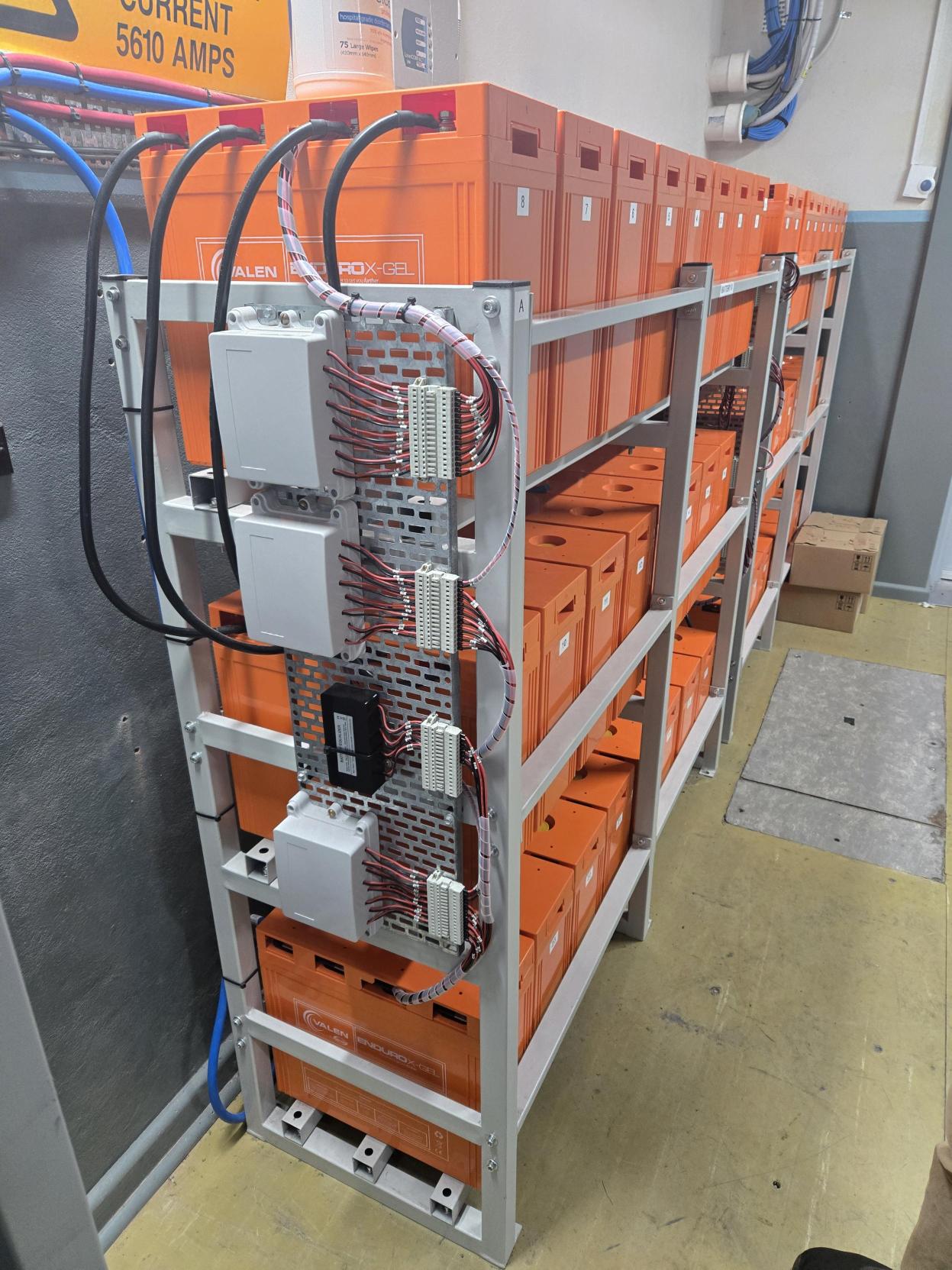
This is the problem with lead-acid batteries in rail signalling applications. They fail quietly, often without warning, and frequently at inconvenient times. And because rail signalling infrastructure sits at remote locations along thousands of kilometres of track, the failure is often not discovered until operations feels it.
What actually causes the failures
Most battery failures in rail signalling cabinets are not dramatic events. They are the result of chemistry and time working against each other in an environment that was never particularly kind to lead-acid batteries.
Heat is the primary accelerant. A signalling cabinet on an exposed section of track in Queensland bakes through summer. Lead-acid batteries lose capacity as temperatures rise, and the capacity loss is not always linear. A battery that tested at 80 percent capacity in a mild month might deliver considerably less in January. The design autonomy that looked acceptable on paper does not survive a heatwave.
Cycling matters too. Signalling batteries in locations with unreliable grid supply cycle more frequently than expected. Every partial discharge and recharge shortens the usable life of a lead-acid cell, often faster than the replacement schedule accounts for.
And then there is the inspection gap. Scheduled battery testing catches obvious failures, but it does not catch the battery that is degrading between visits and will drop below acceptable performance two months after it passed a capacity check. Without continuous monitoring, that battery stays in service until it causes a problem.
What Vantara brings to a rail application
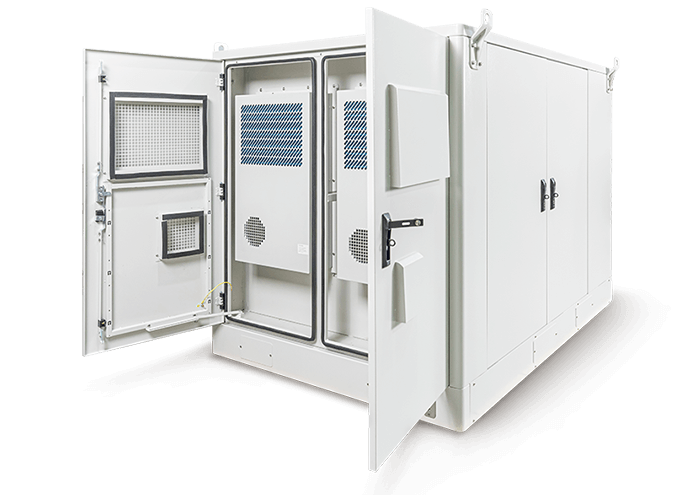
The Vantara standalone power system from Valen is not a direct drop-in replacement for a cabinet battery. It is a complete power source for a signalling location, designed for the operational reality of critical infrastructure that cannot afford unplanned downtime.
The technical specifications matter here, so it is worth being specific.
LiFePO4 battery chemistry. Vantara uses lithium iron phosphate batteries. Compared to lead-acid, LiFePO4 holds capacity far better across temperature ranges, tolerates deeper and more frequent cycling without accelerated degradation, and delivers a significantly longer service life. The standard Vantara configuration carries 55 kWh of installed capacity across 11 battery modules, with a usable depth of discharge of 95 percent and a rated cycle life of 8,000 cycles to 80 percent depth of discharge. For a rail signalling application, that translates to a system that is still performing reliably well beyond the replacement cycle of most lead-acid installations.
Built-in UPS with 8 hours of backup. The Vantara system includes a dedicated 240 W UPS rated for 8 hours of runtime, covering the energy management system, switches, routers, sensors and communications equipment independently of the main power system. For a signalling location, that means the monitoring and communications layer stays up even during maintenance windows or system faults.
3x inverter surge capability. Signalling systems often have high startup loads when they cycle or reset after a grid event. Vantara handles surge loads up to 200 A for five seconds without requiring the system to be oversized for startup conditions. That keeps the specification tight and the capital cost controlled.
Redundancy at every level. Vantara is built with multiple redundancy layers: dual inverters, dual HVAC units, hot-swappable modules and chargers. The built-in UPS backs up the control and communications layer independently of the main inverter. For a signalling location where loss of power means loss of safe operation, that architecture matters. The system is specifically designed to reduce SAIDI and SAIFI, which are the metrics rail network operators and regulators use to measure service reliability.
Modular capacity. The standard Vantara configuration starts at 12.9 kWp of solar, expandable in 12.9 kWp increments. Battery capacity scales with additional modules. For signalling locations where the load may grow over time, the ability to add capacity without replacing the core system is an asset management advantage.
The monitoring piece changes everything for track-side maintenance
The Vonnect energy management system is where Vantara separates itself from a conventional standalone power installation for rail applications.
Vonnect monitors every component at every site in real time: solar array output, battery state of charge, inverter status, HVAC performance, temperature, humidity, door access and system alarms. It links across every asset in the portfolio and raises alerts before problems become failures. Server redundancy is built in for maximum reliability.
For a rail infrastructure manager responsible for signalling power across hundreds of remote locations, that means one person can see the health of every site from a central dashboard. A battery that is trending below expected performance shows up weeks before it would cause an operational issue. Maintenance gets dispatched based on actual system data, not a calendar that does not know what the battery has been through since the last visit.
The cyber security architecture is also relevant for rail operators working within operational technology network requirements. Vonnect integrates with secure networks with no external internet link, which matters for signalling infrastructure that sits on protected OT networks.
Level crossings, HABD and lineside comms
The rail signalling power conversation usually starts with track circuits and interlockings, but Vantara is relevant across the full range of lineside power applications.
Hot axle and wheel bearing detectors (HABD) are among the most safety-critical assets on a heavy haul or passenger rail network. A detector that loses power is a detector that is not watching for a bearing failure that could derail a train. The consequences of that failure mode are in a different category from a delayed service.
Level crossings carry both a safety obligation and a public visibility that other signalling infrastructure does not. A crossing that fails dark or fails to a non-operating state attracts attention, incident reporting and regulatory scrutiny immediately. The power reliability requirement is not negotiable.
Lineside communications nodes, particularly on networks rolling out digital train management or GSM-R/LTE communications, need continuous power at remote locations along the corridor. A dropped comms node during operations creates gaps in train control visibility.
Vantara is suited to all of these applications because the design philosophy is consistent: build in redundancy, minimise parasitic loads, provide continuous monitoring, and deliver a system that operates reliably in the harsh outdoor environments that rail infrastructure sits in.
The maintenance model shift
The practical argument for Vantara in rail signalling is not just about battery chemistry. It is about changing the maintenance model from reactive to predictive.
A portfolio of lead-acid batteries across a signalling network is a portfolio of unknown failure risks. You know roughly when they were installed. You know what they tested at on their last visit. You do not know what they will do tomorrow if the temperature spikes and the grid has a two-hour outage.
Vantara with Vonnect monitoring gives the infrastructure manager a live view of every asset. The shift from calendar-based maintenance to condition-based maintenance reduces the total cost of maintenance over time and, more importantly, reduces the exposure to the failure mode that creates operational disruption.
For rail operators and their contractors, that is not a marginal improvement. It is a structural change in how track-side power infrastructure is managed.
Worth a conversation
If you are managing signalling power across a rail network and you are still running lead-acid batteries at remote locations on a scheduled replacement cycle, the question is not whether you will have a failure. It is whether you will know about it before operations does.
Talk to the Valen team about Vantara for rail signalling applications.
Share
Related Articles
The main job of the Energy Management System is to make sure everytdiscussed and defined during Valen’s design stage.