

In many energy systems today, flexibility is often limited before a project even begins.
Batteries, inverters, monitoring platforms, and control systems are frequently designed to work only within tightly defined ecosystems. While this can simplify initial deployment, it creates long-term constraints, particularly when systems need to evolve.
Over time, those constraints become operational risks.
Most infrastructure environments are not static. Equipment is upgraded, expanded, or replaced as operational needs change. Yet many platforms require specific component pairings, making it difficult to introduce new technologies without replacing large parts of the system.
This creates three common challenges:
For operators, this often means working around the system, rather than the system working for them.
Vonnect(TM) was developed to address this exact constraint.
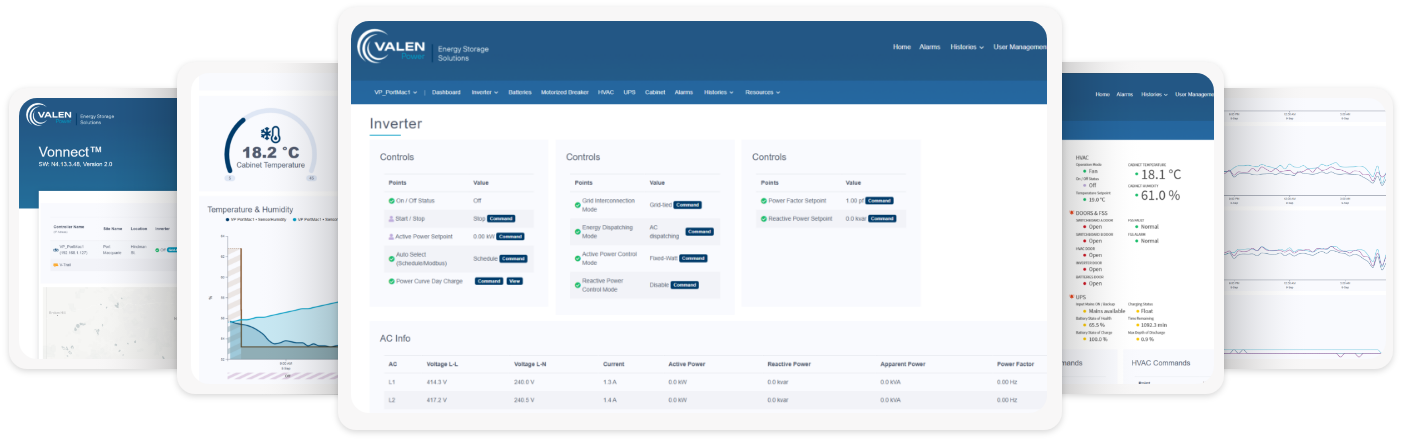
Rather than enforcing predefined combinations, it allows different components—batteries, environmental systems, generators, and control equipment, to operate within a single, unified environment.
This enables a different way of designing systems:
A key shift is moving from isolated subsystems to a unified operational view.
Vonnect(TM) provides a single interface where all measurable data points can be monitored and managed together.
Instead of separate systems for power, environment, and alarms, operators can see how everything is performing in context.
That matters in practice. When systems are connected:
Flexibility is not just about integration. It’s about protecting long-term investment.
Energy systems supporting critical infrastructure are expected to operate for years, often decades. Over that time, technology will change.
An adaptable software layer ensures the system can change with it.
Not through replacement, but through evolution.
The main job of the Energy Management System is to make sure everytdiscussed and defined during Valen’s design stage.
An account is required to add products to your cart, please login or register for an account.