Home / V-Trail | Towable Stand-Alone Power System
V-Trail™
V-Trail Mobile Solar Battery Trailer: Towable Solar Power and a Diesel Generator Alternative
Power up anywhere with V-Trail from Valen — a rugged, reliable, and safe stand-alone system that’s redefining off-grid energy.
- Minimise Diesel, Maximise Solar
- Ease of Towing and Deployment
- Reliable and Safe Power
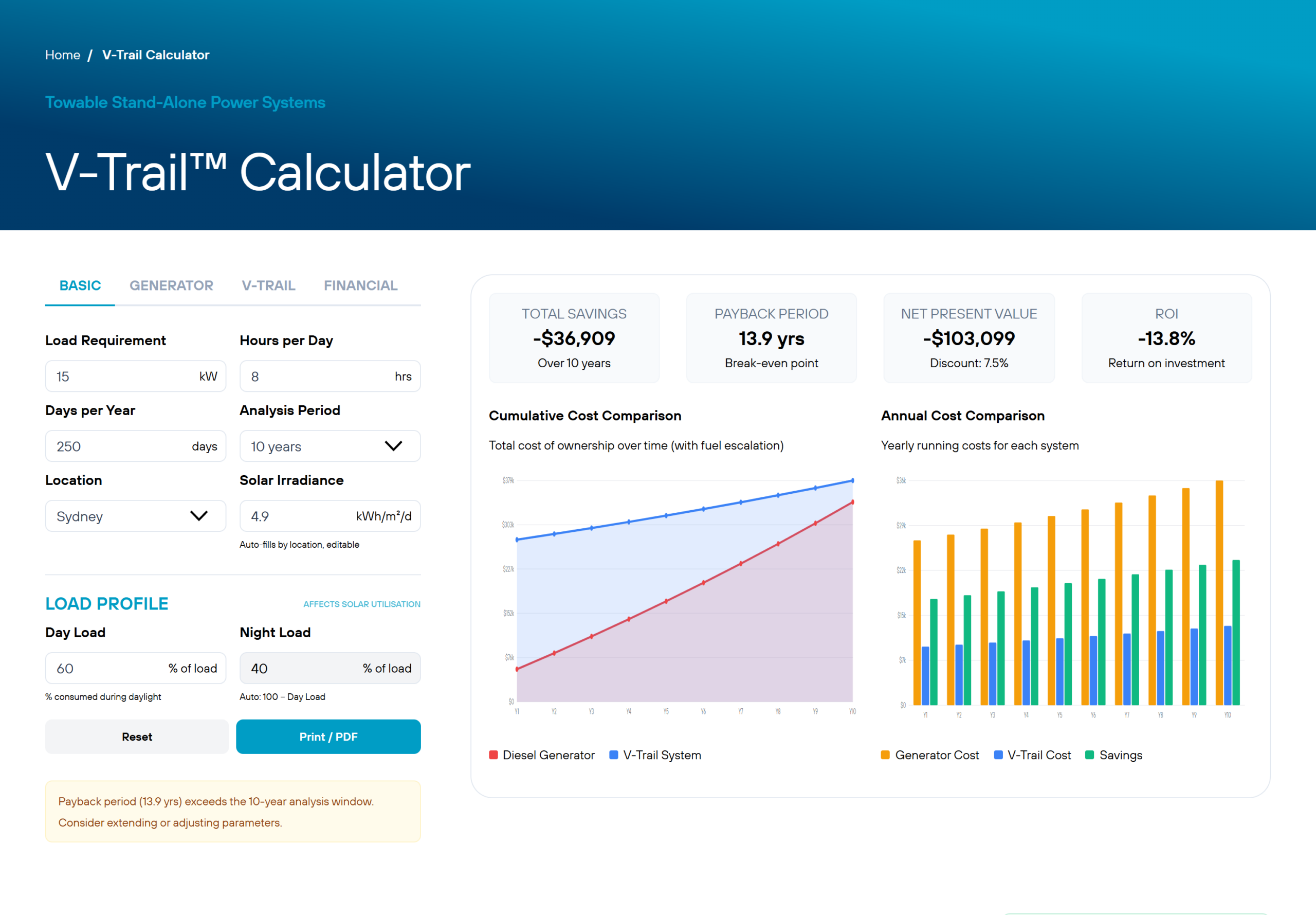
Calculate Your system Needs
Unsure if V-Trail™ the right fit for your project? Use our online calculator to quickly evaluate your needs and see if ModX aligns with your goals in just a few clicks.
Check the V-Trail in Action
Take Reliable Off-Grid Power Further
See how deployable off-grid power can reduce diesel use, improve site reliability, and deliver safe energy anywhere.
Minimise Diesel, Maximise Solar
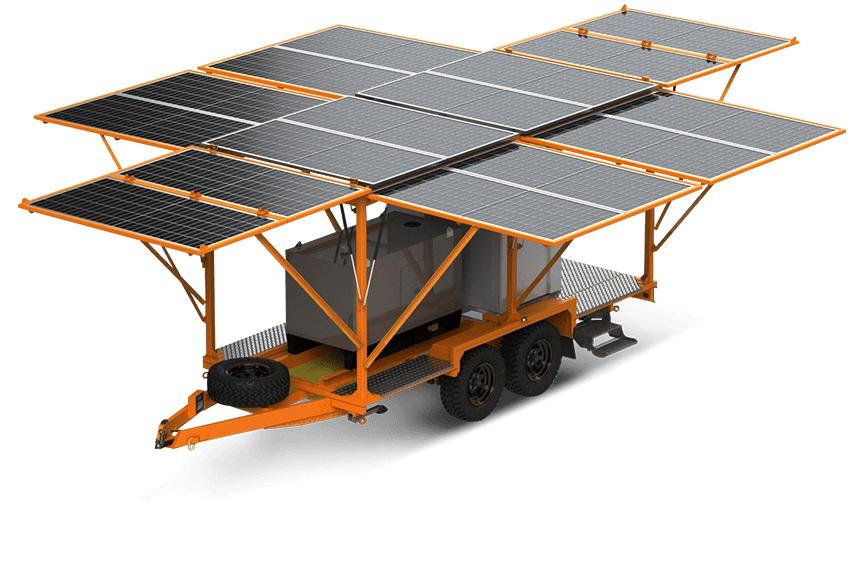
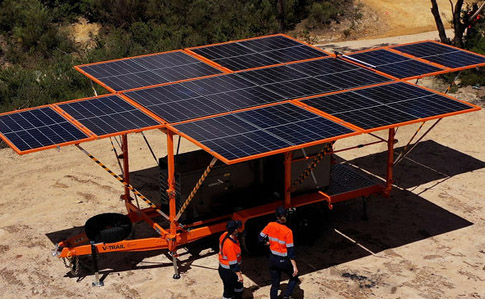
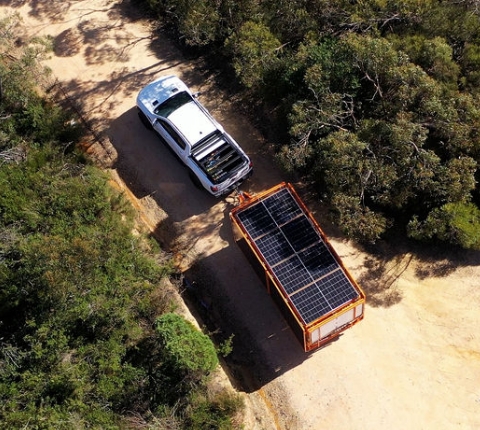
V-Trail is a smarter alternative to diesel-only power. Its hybrid system combines up to 8.16 kW of solar PV with a 30 kW diesel generator — maximising renewable energy while ensuring reliable backup when it’s needed.
Less fuel. Lower impact. Power you can depend on.
Ease of Towing and Deployment
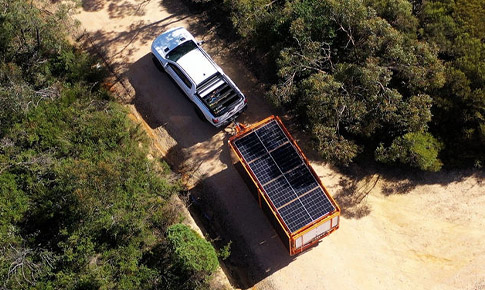
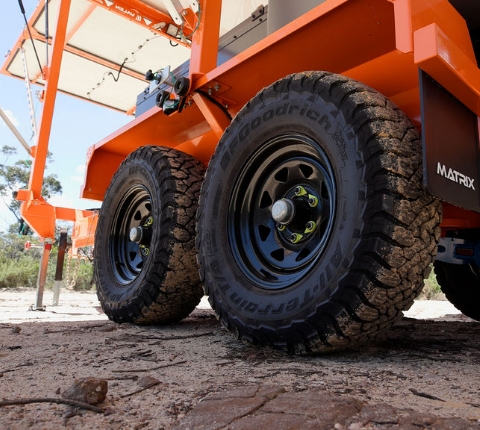
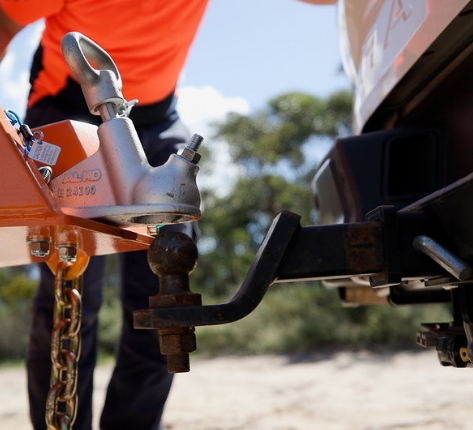
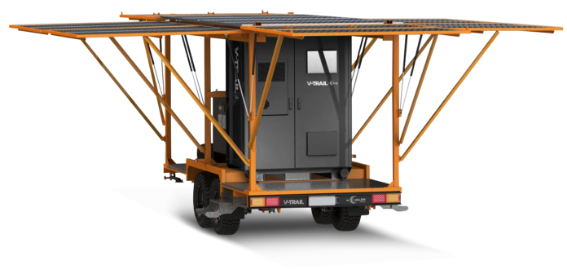
Valen’s trailer-mounted SAPS comes in at under 3,500kg and is engineered for superior towing and manoeuvrability, making it ideal for rugged and remote environments. Optimized departure angles protect the solar panels during transit, preventing damage on uneven terrain. Gas struts support a fast, straightforward setup in under ten minutes with two operators — so V-Trail can deliver power where and when it’s needed, fast.
Operators must ensure the selected towing vehicle and configuration are suitable for the V-Trail system and meet all applicable safety and compliance requirements.
Reliable and Safe Power
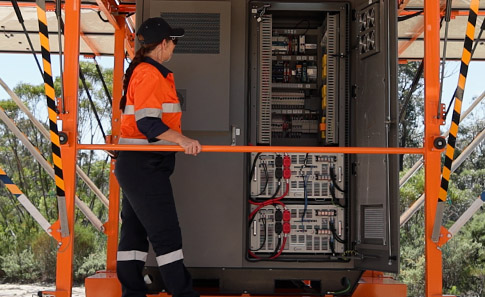
Valen’s industry-leading inverters are designed to handle high fault currents and minimise parasitic loads; ensuring they meet strict electrical safety requirements while delivering you an efficient system. Our priority is safety and real-world performance. Built to globally recognised benchmarks, Valen’s V-Trail delivers trusted reliability, protection, and peace of mind.
Rugged, Remote, and Reliable Off-Grid Energy
The V-Trail units are designed as fully functional hybrid systems incorporating solar PV, lithium battery storage, and a diesel generator, all while incorporating off-road capabilities.
System Features
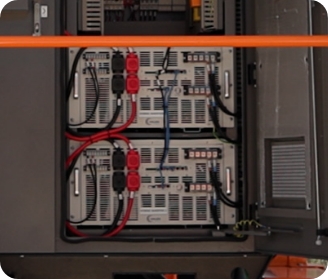
Industry-leading inverters
Featuring high surge capability and extremely low parasitic load consumption
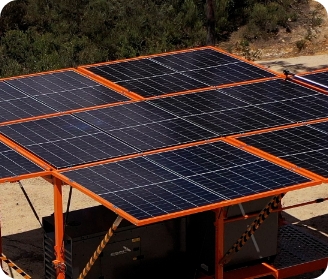
8.16kW peak solar
PV mounted on a trailer, deployable by a single operator via a gas-strut mechanism.
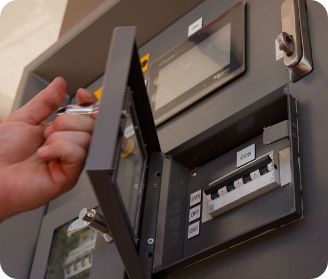
Maximum MPPT charge power of 35kW
Allowing for future PV expansion via solar mat or skid.
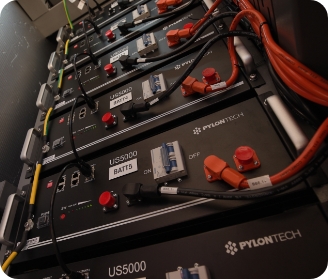
43kWh of lithium iron phosphate (LiFePO₄)
Battery storage, utilising nine 4.8kWh modules.
Frequently Asked Questions
What is a towable stand-alone power system?
A towable stand-alone power system is a complete off-grid power plant built onto a road-registrable trailer, so it can be towed to a site, deployed in minutes, run unattended, and then relocated to the next site. V-Trail combines solar generation, lithium battery storage, a diesel generator, an inverter producing standard 230/240 V AC, and an integrated energy management system on a dual-axle off-road trailer.
It is different from the two things people usually compare it to:
A generator on a trailer produces power only while it is running and consuming fuel, needs refuelling on a cycle measured in hours to days, and is noisy whenever it is working. A towable stand-alone power system produces power from the sun by default and uses the generator as backup.
A fixed stand-alone power system is installed on footings at one location for its service life. A towable system is designed to be redeployed, which changes the economics completely if the requirement is measured in weeks or moves between sites.
The applications where that distinction is decisive: emergency and disaster response, planned network outages and switching works, construction and exploration, event power, mobile facilities, and any situation where power is needed sooner than a permanent installation can be built.
How quickly can a V-Trail be deployed?
Setup is fast because the system is complete and pre-configured on arrival. There is no assembly, wiring or commissioning at site. The solar array folds out on a gas-strut-assisted frame.
Under 10 minutes with two operators.
The number that actually matters to an emergency or outage response, though is not the setup time. It is the total time from decision to power on site. That is dominated by travel and by whether the unit is available, staged and fuelled, not by how long the panels take to unfold. Two things move it:
- Where the unit is stored relative to where it will be needed. A V-Trail staged at a regional depot beats one at head office by hours.
- Whether an operator has been trained to deploy it. It is designed for a single person with no specialist skills, but “designed for” and “has done it before” are different things at 2am in the rain. Training is available and worth taking.
For planned works, a switching outage, a substation cutover, a possession, the deployment time means the unit can be positioned and proven the day before rather than becoming part of the critical path.
What load can a V-Trail run, and for how long?
|
Parameter |
Rating |
|---|---|
|
Solar array |
8.16 kWp, foldable, gas-strut assisted frame |
|
Solar charge controllers |
8 MPPT trackers, 35 kW maximum charge power, 5 kW per tracker, 99.90% MPPT efficiency, 580 V maximum PV open-circuit voltage |
|
Battery |
43 kWh nominal / 41 kWh usable, LiFePO₄, 48 V DC, built on Valen SOLiCORE modules |
|
Battery cycle life |
5,000+ cycles at 100% DoD · 10,000 cycles at 80% DoD |
|
Battery charge temperature |
0 °C to 55 °C |
|
Battery discharge temperature |
−20 °C to 60 °C |
|
Inverter |
30 kVA continuous at 25 °C, derating to 23.8 kVA at 40 °C |
|
AC output |
230/240 V, total harmonic distortion under 2%, 96% maximum efficiency |
|
Backup generator |
27 kVA, aluminium super-silent enclosure |
|
Fuel tank |
100 L, bunded, mounted in the trailer base for a low centre of gravity |
|
Surge (5 seconds, motor starting) |
200 A |
|
Short-term peak (1 minute) |
85 A |
|
Maximum demand (5 minutes) |
75 A |
|
Short circuit |
375 A |
Note the inverter derating, 30 kVA at 25 °C becomes 23.8 kVA at 40 °C. We publish it because it is real and because a 40 °C day is not unusual anywhere in Australia. Any mobile power system quoting a single inverter figure without a temperature is quoting the best case; ask for the derated figure at 40 °C before you size your load against it.
Runtime depends on load, solar yield and whether the generator is enabled. With the generator running as backup, runtime is limited by fuel rather than by battery, the 100 L tank governs. Solar-only runtime is a function of daily generation against daily consumption, which is a site and season calculation rather than a product specification. Model your own case with the V-Trail calculator, or send us the load and location and we will do it with you.
Can a V-Trail power high-surge or motor-starting loads?
Yes, 200 A for five seconds is the motor-starting surge capability, with 85 A available for one minute and 75 A for five minutes, and 375 A short-circuit capability.
Surge is usually the specification that decides whether a mobile power system succeeds in the field, and it is the one most often overlooked at hire or purchase. Inductive loads, bore and dewatering pumps, compressors, refrigeration, workshop machinery, welding, draw three to six times running current at start. A system sized only on continuous rating will trip on the first pump start.
The alternative to genuine surge capability is oversizing everything, which is how mobile power ends up costing more than it should. A high-surge inverter lets the system be sized to the continuous load and handle the transient one.
Two things to tell us at enquiry, because they change the answer:
- The largest single motor on site, its rating, and whether it has soft-start or a variable speed drive.
- Whether multiple large loads can start simultaneously. Sequenced starting is much easier to supply than coincident starting.
One commissioning note we state up front: avoid applying large surge loads during initial system start-up. Bring the load up in sequence.
Do I need a special licence or vehicle to tow a V-Trail?
V-Trail is built to keep towing within reach of a standard licence and a capable work vehicle:
| Parameter | Specification |
|---|---|
| Gross weight | Under 3,500 kg |
| Dimensions | 6500 mm Long× 2033mm Wide × 3583mm High |
| Axles | Dual axle |
| Suspension | Cruisemaster CRS independent |
| Chassis | 350-grade high-tensile Australian milled steel, FEA tested and engineered before manufacture |
| Deck | 6 mm checkerplate aluminium |
| Compliance | Built to ADR and VSB1 |
| Registration | NSW and QLD registration compliant |
What you need to confirm on your side:
- A towing vehicle rated for the actual weight, including its tow ball download limit and its Gross Combination Mass, not just the headline braked towing capacity. A vehicle rated to tow 3,500 kg often cannot do so while also carrying a crew and equipment.
- The correct coupling and electrical connection, and functioning trailer brakes.
- Licence class for the combination in your state. Under 4,500 kg GVM a car licence is generally sufficient, but the combination mass and any state-specific requirement should be checked rather than assumed.
- Terrain. The independent suspension and off-road build are there for unsealed access, but “off-road capable” is not “unlimited”. If the access track is genuinely marginal, tell us before deployment day.
How much diesel does a hybrid power system save compared with a generator?
The saving comes from the generator not running, and how much that is worth depends on three site-specific variables: the load profile, the solar resource at that location and season, and how long the unit is deployed. Model your own case with the V-Trail calculator, enter your load, hours per day, location and analysis period and it will return the fuel, cost and emissions comparison for your site.
What is structurally different about a hybrid system, and holds regardless of the site:
- A diesel generator runs continuously to serve a variable load, spending much of its life lightly loaded, which is where it is least efficient and where wet stacking and maintenance problems originate. A 27 kVA set carrying a 4 kW load is running at under 20% of its rating.
- A hybrid system serves the load from solar and battery, and starts the generator only when the battery needs recharging. The generator runs at high load for a short period rather than at low load continuously.
- Fuel is not the only cost avoided. Refuelling trips, service hours, and the emissions and noise footprint all scale with generator run hours. On a remote site, the refuelling logistics can exceed the fuel cost.
- The measure to ask for is generator run hours per week, not litres per hour. Run hours are what drive fuel, servicing and site visits together.
Power your potential with Valen Power

Specifications
The configurations below represent the standard size for Valen’s Towable
Stand Alone Power System (V-Trail™).
| PV Array | Total PV Array Size (kWp) | 8.16kWp |
|---|---|---|
| Energy Storage | Nominal Voltage (VDC) | 48VDC |
| Nominal Capacity | 43kWh | |
| Battery Chemistry | LiFePO4 | |
| Bi-Directional Inverter | Nominal Voltage (VDC) | 48VDC |
| AC Output Voltage | 230/240VAC | |
| Generator | Backup Generator Rating (kVA) | 30kVA |
| Fuel tank (Low CoG trailer base mount) | 100L | |
| Trailer | Dual Axle Trailer | Cruisemaster CRS Independent suspension |
| Trailer Material | Australian Milled Steel - 350 Grade high tensile, 6mm Checkerplate Aluminium Deck Plates |
Please Note: Operators must ensure the selected towing vehicle and configuration are suitable for the V-Trail system and meet all applicable safety and compliance requirements.
What’s Under the Hood?
Complete the form below to receive the V-Trail technical brochure and detailed system specifications.
Take Reliable Off-Grid Power Further
See how deployable off-grid power can reduce diesel use, improve site reliability, and deliver safe energy anywhere.

Premium Energy Management System
Empowering electricity networks through advanced energy management, Vonnect is designed to optimise asset control, streamline network operations, and reduce environmental impact. By centralising comprehensive monitoring and providing seamless control across critical power assets, we enable network operators to minimise field visits, cut operational costs, and focus their teams on high-value tasks.

Control every site, every component from any location - effortlessly.
Vonnect is an agnostic, all-encompassing remote monitoring and management platform to track, analyse and optimise the performance and management of your assets. Single dashboard for all data points including batteries, temperature, door alarms etc. If you think it, we can monitor it from this dashboard..
Seamless integration for Future-Proof Efficiency
The main job of the Energy Management System is to make sure everything is working together and synchronised. Valen’s monitoring solution can take a variety of protocols and feed out a selected protocol. Valen’s EMS also has the ability to introduce new protocol drivers as technology changes.
Dynamic and adaptable
Vonnect is designed for flexibility, allowing it to adapt as operational requirements change. New drivers and communication protocols can be added as needed and quickly deployed to the EMS, ensuring the system remains ready without disruption. With 34 digital and analogue input and output points, Vonnect can manage a wide range of applications across diverse environments. Its low power consumption further enhances overall system efficiency, supporting reliable performance without adding unnecessary load.
Cyber-security
Cyber security is and should be at the forefront of community battery deployment. Vonnect comes with agnostic integration to all components through a control and monitoring network. This enables a single login and control from one platform and can be tailored to requirements.


Discover
We work to understand your needs, challenges and opportunities.

Design
We provide solutions backed by 25 years of technical experience

Deliver
We strive for excellence in procurement, dispatch and delivery.

Support
We support you for the life of your system.

Recent Case Study
What it costs to maintain a SWER line, and why SAPS is often cheaper
Single wire earth return lines exist because extending three-phase to a few remote customers never stacked up. But the marginal SWER line is not free: it is inspections, vegetation management, fault response, bushfire risk and replacement of ageing conductor, often to serve a handful of connections. A stand-alone power system can remove the line while […]
Articles
The main job of the Energy Management System is to make sure everytdiscussed and defined during Valen’s design stage.


