If you manage backup or standby power for critical infrastructure, there is a good chance you have already made the shift from VRLA to lithium iron phosphate (LiFePO4) — or you are actively weighing it up. Either way, you may have started hearing the term solid state and wondering whether it changes anything for you.
It does. Not because it is new technology for its own sake, but because it directly addresses some of the most persistent frustrations with managing battery systems in the field — replacement cycles that come around too soon, safety concerns that slow down approvals, batteries you cannot see inside, and remote sites you have to physically visit just to know whether your backup power is still healthy.
Here is what solid state actually changes, and what that means on the ground.
LiFePO4 is a strong technology — and solid state builds on it
Before we go further, it is worth being clear: LiFePO4 remains a capable, well-proven chemistry. If you are still running VRLA and considering a change, lithium iron phosphate is a genuine improvement in almost every respect — cycle life, usable capacity, weight, and footprint.
But in any LiFePO4 battery, the electrolyte is a liquid. That liquid is where the chemistry works — it is the medium ions travel through as the battery charges and discharges. It is also the part of the battery most responsible for the limitations that operators run into over time: a ceiling on cycle life, a source of thermal risk, and a gradual degradation mechanism that shortens service life faster than the spec sheet suggests.
Solid state replaces that liquid electrolyte with a solid alternative. That single change flows through to several concrete improvements in how these batteries perform and behave in the field.
Longer service life — and what that actually means for your replacement budget
A standard LiFePO4 battery delivers around 6,000 cycles to 80% remaining capacity. Solid state raises that to approximately 10,000 cycles at the same depth of discharge — up to 50% more usable life from the same battery.
For a radio tower site, a WISP installation, or a mining communications node where the battery is cycling daily on solar, 6,000 cycles is roughly 16 years of service life. 10,000 cycles is closer to 27. For many operators, that means a solid state battery installed today may not need replacing for the life of the site lease — or the infrastructure it is protecting.
The cost premium for solid state currently sits at around 15–20% over equivalent LiFePO4. When you weigh that against a service life that is up to 50% longer, the case for specifying solid state at the next refresh — or even at a mid-life replacement — is straightforward. You are paying a modest premium once, to avoid an entire replacement cycle later.
A safer battery — and why that matters beyond the spec sheet
For some operators, the shift from VRLA to lithium has been slower than the technology warrants, not because of performance doubts, but because of safety approvals. Getting sign-off to install lithium in an enclosed cabinet, a remote hut, or a shared facility can be a long process — and a thermal event anywhere in the network makes the next approval harder.
Solid state significantly reduces that risk. Without a liquid electrolyte, there are fewer free ions in motion during operation, which directly reduces the likelihood of thermal runaway — the failure mode that causes the most serious consequences when it occurs.
For a public safety network operator, a thermal event in a GRN or PSN radio cabinet is not just a hardware replacement. It is a potential service outage for emergency services, a safety investigation, and a difficult conversation with stakeholders who need that network to be reliable under pressure. For a mining operator, it can mean a site shutdown. For a rail signalling installation, the consequences of an unplanned failure extend well beyond the battery itself.
Solid state does not eliminate risk entirely, but it meaningfully lowers it. For operators where safety approval has been a genuine barrier to lithium adoption, this is where the conversation should start.
More capacity in the same space — fewer cabinets, less civil work
Battery capacity and physical footprint are rarely considered separately in the field. When you need more backup time, the answer has traditionally been more batteries, which means more space, more cabling, and often more civil expenditure.
Solid state changes that equation.
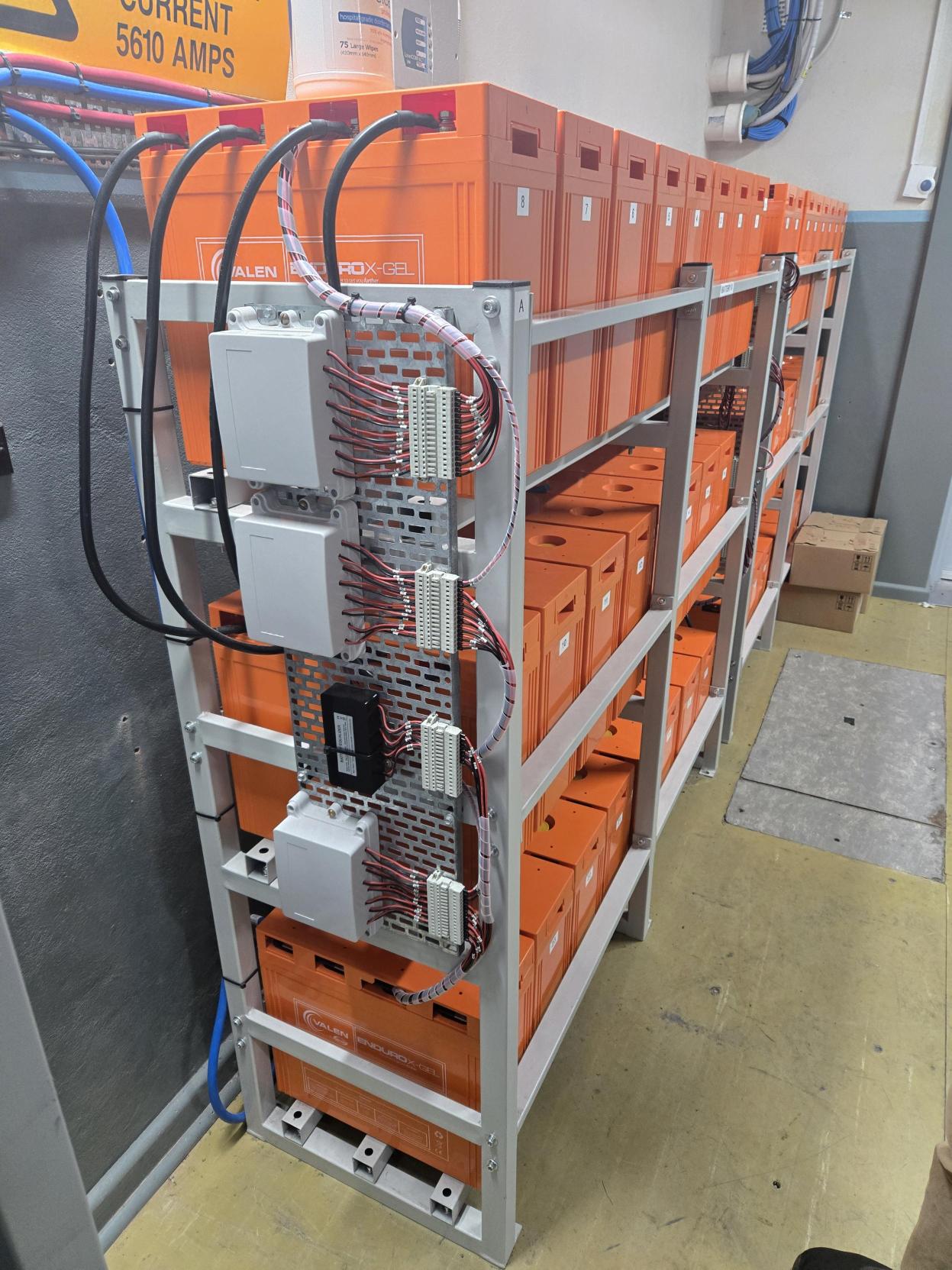
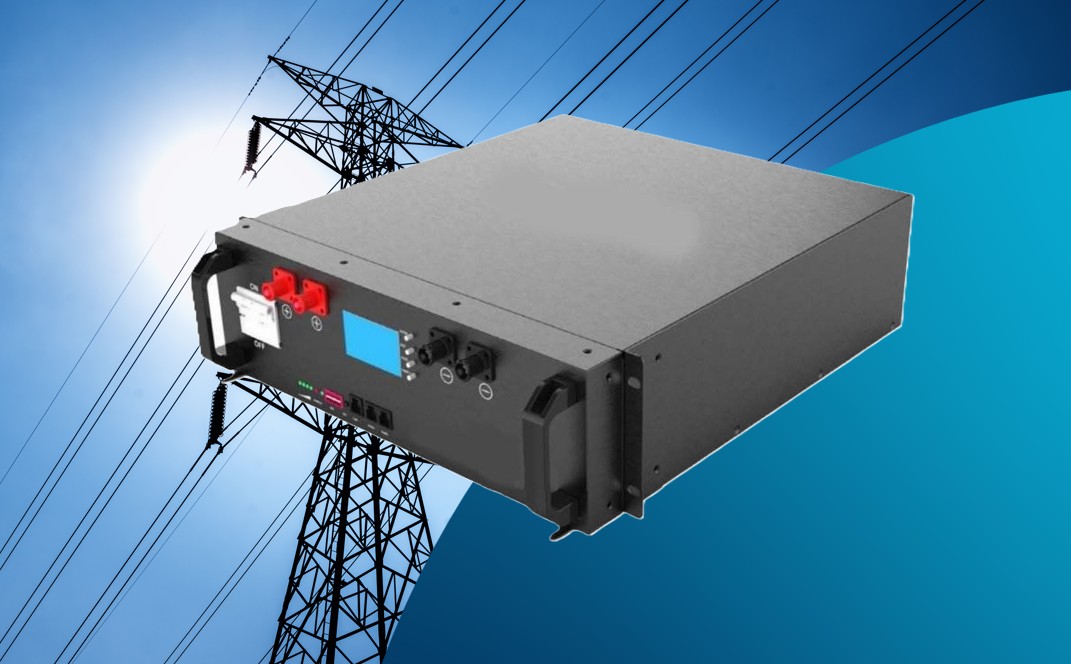
Valen Power currently offers a 48V, 100Ah rack-mount battery in a 3RU form factor. The next-generation solid state cell in development targets 120Ah in the same physical dimensions. Carried through to a full rack comparison: a configuration that previously delivered around 3.7kWh of usable energy from a lead acid installation can approach 9.8kWh of usable capacity from solid state in the same footprint — roughly two and a half times the backup energy without touching the cabinet size or the cable runs.
For operators upgrading existing sites, that means extended backup time within the existing infrastructure envelope. No new cabinets. No additional civil works. No re-cabling. The upgrade happens inside the same space, and the site comes out with significantly more resilience than it went in with.
Knowing what your batteries are doing — without driving to site
This is where solid state addresses one of the most practical, day-to-day frustrations in managing distributed battery infrastructure.
With VRLA, a technician could run an impedance test to assess battery health on-site. With sealed lithium, that is not possible — the state-of-health information exists inside the battery management system (BMS), but getting to it has historically required either a physical visit or accepting that you simply do not know.
The consequence is a familiar one: batteries that look fine until they are not. A site visit triggered by a monitoring alarm, only to find the battery has already degraded to the point where it cannot support the load it was designed for. Or, conversely, scheduled maintenance visits to batteries that turn out to be perfectly healthy — time and cost spent on travel that the data could have saved.
Solid state batteries communicate that data outward. Valen Power’s solid state BMS is confirmed to operate with Victron monitoring systems, and can transmit detailed cell-level information: individual cell voltages, temperatures, state of charge, cycle count, and state of health. For an organisation managing fifty tower sites, a rail corridor, or a regional ITS network, that means one person at a desk can see what every battery in the fleet is actually doing — and respond to real conditions rather than schedules or assumptions.
The value is not just visibility for its own sake. It is catching a battery that is degrading in cell three of rack two at a remote site, before it fails during an actual storm event or network peak. That is the difference between a planned replacement and an unplanned outage — and in critical infrastructure, those two outcomes are not remotely equivalent.
Who should be looking at this now?
Telco and radio communications operators — GRN, PSN, WISPs, radio tower sites If your batteries are cycling daily on solar or hybrid power, the extended cycle life of solid state directly extends the interval before your next replacement. Combined with remote health monitoring, you also reduce the frequency of routine site visits to check on batteries that, most of the time, do not need attention.
Mining operators Remote sites, significant travel costs to attend, and safety environments where a thermal incident carries serious consequences. Solid state addresses both the safety and the visibility problems simultaneously.
Rail and intelligent traffic systems Infrastructure where unplanned failure has cascading consequences. The ability to monitor battery state of health remotely and replace proactively — rather than reactively — is directly relevant to maintaining the uptime these systems require.
UPS and standby applications Lithium has traditionally been harder to justify in pure standby applications where cycle count is low. But where data visibility and remote monitoring matter — public safety networks, large-scale UPS installations, facilities where site access is restricted or costly — the monitoring capability solid state enables changes the maintenance model meaningfully.
Any operator approaching a VRLA or LiFePO4 replacement decision If your current batteries are nearing end of life, the replacement decision is an opportunity. Specifying solid state at that point costs modestly more upfront, and may mean you do not face that decision again for the life of the site.
Where the technology is heading
Battery technology continues to develop. Solid state is not the final step — but it is the next credible, commercially available one. Valen Power’s approach is to stay ahead of what is proven and deployable, not to wait for technologies that are still years from the field.
Solid state is available now. It is being deployed. And it offers measurable, practical advantages over standard LiFePO4 in the environments and applications that matter most to the operators reading this.
The practical question
Whether you are planning your next site upgrade, approaching a fleet replacement, or trying to reduce the operational burden of managing remote infrastructure — solid state is worth a direct conversation.
Valen Power is here to work through the specifics with you: which sites benefit most, what the replacement economics look like for your fleet, and how monitoring integration fits your existing systems. Not a product pitch — a practical assessment of what makes sense for your infrastructure over its full service life.
To discuss how solid state technology applies to your specific infrastructure, contact the Valen Power team
Share
Related Articles
The main job of the Energy Management System is to make sure everytdiscussed and defined during Valen’s design stage.