Home / Vantara | Stand-Alone Power Systems
Vantara™
Stand-Alone Power Systems
Vantara™ is a modular standalone power system, which enables you to increase capacity as requirements change. It has built-in redundancy, high availability and fault tolerance for critical loads.
With 3x inverter surge capability, it manages extreme startup
loads without oversizing. Vantara’s low parasitic loads, maximises efficiency and reduces energy waste.
Up to 90kVA continuous inverter output, and reliable supply for
high-demand applications. Vonnect energy management system
centralises monitoring, control, and alarms across all assets.
Vantara is proven in remote and off-grid locations,and reliable in
harsh environments.
- Industry-Leading Surge Capability
- Extremely Low Parasitic Loads
- Modular, Scalable and Cost-Effective


Modular
Valen’s Vantara™ is designed with exceptional flexibility and scalability to adapt to evolving energy demands. Its modular design allows for seamless integration of additional inverters and batteries as requirements grow, ensuring that one charge can easily expand to two or more without extensive modifications. With adjustable racking and hot-swappable inverters, modules, and chargers, maintenance is simplified, minimizing downtime and enhancing system reliability. The system is also future-proof, capable of accommodating add-ons like electric vehicle (EV) charging, making it a versatile solution for both current and future energy needs.
Redundancy Built-in
Valen’s Vantara™ is designed to ensure continuous, reliable energy, minimising downtime and maintaining uninterrupted operation to reduce SAIDI and SAIFI. Built in UPS and multiple levels of redundancy makes it ideal for critical and off-grid applications, offering enhanced reliability, reduced risk of service disruption, and peace of mind that your power infrastructure is always protected.


Premium Energy Management System
Valen’s unified energy management system excels in cyber security, seamlessly integrating with your secure network with no link to the outside world. it monitors, controls and alarms on all on-site components – including HVAC, UPS, temp, humidity, access, energy system and generator etc – while linking across all sites and assets. With server redundancy for maximum reliability and built-in tools for scheduling maintenance and servicing, it streamlines operations, delivers realtime performance insights, and helps prevent issues before they arise.
Frequently Asked Questions
How does a SAPS affect SAIDI and SAIFI?
A SAPS removes the customer’s dependence on a long, fault-prone distribution feeder, which is why distributor led SAPS programmes are usually justified on reliability as much as on cost. The customers who receive SAPS are typically the worst-served on the network, end-of-feeder, high line-length-per-customer, slow to patrol and slow to restore, so their outage minutes carry disproportionate weight in network-level SAIDI and SAIFI.
Two design factors determine whether the improvement is realised in practice rather than on paper:
Redundancy inside the SAPS. A single-string system with one inverter and no generator has moved the single point of failure from the feeder to the site. Vantara is built with built-in redundancy and hot-swappable inverters, battery modules and chargers, so a component failure degrades output rather than removing supply.
Visibility. An unmonitored SAPS fails silently until the customer calls. A monitored one raises an alarm before the outage. The reliability benefit of a SAPS fleet is directly proportional to how quickly the network learns that a system needs attention.
Approximately 90% outage reduction on SAPS-served properties is a network’s own published figure, not a supplier claim. That distinction matters for a business case – it is a utility’s own assessment of its own performance.
How big a load can a SAPS run, and can it handle motor starting?
Vantara delivers 30 kVA of continuous inverter output per unit at 25 °C, standard and configurations available up to 90 kVA continuous. AC output is 230/240 V with total harmonic distortion under 2% and maximum efficiency of 96%.
Surge capability is usually the deciding specification, not continuous rating, and it is where most off-grid systems fail in service. Inductive loads, bore pumps, irrigation, compressors, workshop machinery, refrigeration, draw three to six times their running current at start.
Vantara’s connection capability:
|
Duration |
Capability |
|---|---|
|
Continuous, 1 hour |
115 A |
|
5 minutes |
135 A |
|
1 minute |
150 A |
|
5 seconds (motor starting) |
200 A |
|
Short circuit |
320 A peak |
That 200 A five-second surge is what lets a Vantara start a pump without oversizing the whole system to cover a two-second event. The alternative, specifying a system twice as large as the continuous load requires, is how off-grid projects end up with capital cost that kills the business case.
Tell us at design stage what the largest single motor on site is and whether it has soft-start. During initial system start-up, sequence the load bring-up in steps rather than applying all loads at once. This manages inrush current and protects the system from unnecessary stress at commissioning.
What happens if it’s cloudy for a week?
Three mechanisms handle it, in order.
Storage. 55 kWh of usable lithium capacity as standard, expandable in 25 kWh increments, at up to 95% depth of discharge, so the nameplate capacity is very nearly all available, rather than half of it as with a lead-acid design.
Generator backup. Where fitted, the generator starts automatically on low state of charge and stops once the battery is recharged, without site attendance. The battery management system holds the inverter’s shutdown threshold well above zero, so the system recovers rather than collapsing.
Design margin. This is the part that actually decides the outcome, and it happens before anything is installed. AS/NZS 4509.2 guides autonomy at 2 days with automatic generator control, 2–3 days with manual control, and 4–5 days for a system with no generation backup, but the number that governs is the maximum contiguous run of low-solar days at your specific site, in the worst month, at end-of-life battery capacity rather than nameplate.
Any supplier who answers “how many cloudy days?” without asking for your location and load profile is guessing. Ask what solar resource dataset they used and what year of degradation they modelled.
Can a SAPS be expanded later?
Yes, Vantara is modular by design, and expansion is a defined product step rather than a redesign. Three upgrade paths:
- Energy Store Upgrade, 25 kWh packages of five 5 kWh lithium modules
- Additional Solar, 12.9 kWp ground-mount arrays with fencing
- High Demand Kit, 15 kVA of additional inverter capacity plus 30 kWh of storage
Inverters, battery modules and chargers are hot-swappable, so capacity can be added without taking the site off supply.
The practical value of this shows up in two situations. The first is load growth you did not forecast, a customer adds a shed, a comms site adds equipment, a pump is upsized. The second, and more valuable for a network, is evidence-based augmentation planning: because the energy management system logs generation, load and state-of-charge history, the decision to add capacity is made from measured data rather than from a complaint. Over a fleet, that is the difference between augmenting the sites that need it and augmenting all of them.
The architecture also accommodates future additions such as EV charging, which is worth knowing if the site is a depot, a community facility or a remote workshop.
What are the Vantara solar and battery specifications?
Solar generation
|
Parameter |
Specification |
|---|---|
|
PV array |
12.9 kWp, 20 panels at 589 Wp, expandable in 12.9 kWp increments |
|
Solar charge controllers |
2 × 17.5 kVA = 35 kVA |
|
Maximum charge power per tracker |
5 kW |
|
MPPT efficiency |
99.90% |
|
Maximum PV open-circuit voltage |
580 V |
|
Blackstart |
Capable, DC coupled |
Battery storage
|
Parameter |
Specification |
|---|---|
|
Chemistry |
LiFePO₄ |
|
Nominal voltage |
48 V DC |
|
Module capacity |
5 kWh nominal, 4.75 kWh usable |
|
Standard configuration |
11 modules = 55 kWh installed |
|
Maximum depth of discharge |
95% |
|
Cycle life |
8,000 cycles to 80% depth of discharge |
|
Battery standards |
IEC 62619, CE, UN 38.3 |
Enclosure and environment
|
Parameter |
Specification |
|---|---|
|
Ingress protection |
IP55 |
|
Operating temperature range |
−30 °C to +60 °C |
|
Construction |
Fire-resistant twin-walled, painted aluminium |
|
Security |
Door alarm, padlockable lock |
|
Cooling |
2 × 1,500 W HVAC, inverter compressor, R134A refrigerant |
Who owns and maintains a stand-alone power system?
It depends on the delivery model, and the distinction matters for both regulatory and commercial reasons.
Under a distributor-led model, the DNSP owns, installs, operates and maintains the SAPS as a network asset, and the customer continues to be supplied and billed as a network customer. Essential Energy, for example, installs, owns, maintains and operates its SAPS at no additional charge to eligible customers. Eligibility is typically limited to existing connections with an established retail account, not greenfield sites or new developments.
Under a customer-owned model, which is how most telecommunications, mining, rail and water SAPS are procured, the asset owner owns the system and maintains it directly or under a service agreement.
Valen supplies into both. What changes between them is not the hardware but the documentation, the monitoring architecture and the maintenance regime, because a network asset carries obligations a private asset does not.


Specifications
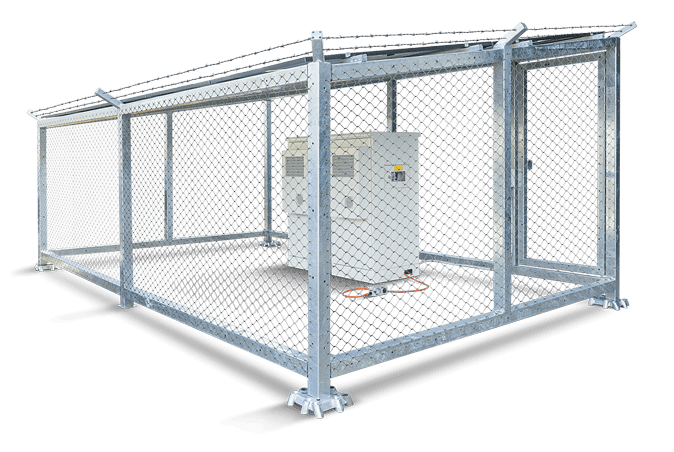
The configurations below represent standard sizes for Valen’s Vantara™; however, we offer tailored designs to meet a wide range of requirements.
| Fence Surrounding SAPS | Standard SAPS Design | |
| SAPS Foundation | Weed Mat & Compacted Gravel |
|
| PV Solar Array | No of Panels | 20 |
| Panel Size (Wp) | 589 Wp | |
| Total PV Array Size (kWp) | 12.9 kWp (Options in 12.9 kWp increments) |
|
| Solar Charge Controller |
Blackstart Capable (DC coupled) | Yes |
| PV Controller Rating (kVA) | 17.5 | |
| PV Controller Quantity | 2 | |
| PV Controller Total Capacity (kVA) | 35 | |
| Maximum Charge Power Per Tracker | 5kW | |
| MPPT Efficiency | 99.90% | |
| Maximum PV VOC | 580V | |
| Nominal Voltage (VDC) | 48 | |
| Nominal Capacity per Battery Module (kWh) | 5kWh | |
| Usable Capacity per Battery Module (kWh) | 4.75kWh | |
| Max DC current (A) | 1595 | |
| Energy Storage | Maximum Depth of Discharge DOD | 95% |
| Battery life (Cycles) to 80% DoD | 8000 | |
| Battery Module Quantity | 11 | |
| Battery Chemistry | LiFePO4 | |
| Total Installed Capacity (kWh) | 55kWh | |
| Battery Standards | IEC62619/ CE/ UN38.3 | |
| Bi-Directional Inverter Charger |
Inverter Quantity | 2 |
| AC Output Voltage | 230/240VAC | |
| Harmonic Distortion | <2% | |
| Inverter Continuous Rating @25°C (kVA) | 30 | |
| Maximum Efficiency | 96% | |
| Maximum Charge Rate (48V) | 400A | |
| Inverter Standards Safety |
EN-IEC 62477-1, EN-IEC 62109-1 and -2 EMC: EN-IEC 61000-6-1 to -6-4 |
| SPS Connection Service Capacity |
Continuous Demand for 1hr (A) | 115 |
| Maximum Demand for 5m (A) | 135 | |
| Short Term Peak Demand for 1m (A) | 150 | |
| Surge Load (i.e. Motor Starting) for 5s (A) | 200 | |
| Short Circuit (Apk) | 320 | |
| Protection Device |
Remote resetable capability | Yes |
| Protection Device Rating (A) | 63A | |
| Power Source (V-AC/DC) | 48VDC | |
| Cooling | Compressor Type | Inverter |
| Refrigerant Type | R134A | |
| HVAC capacity (W) | 1500W | |
| HVAC Quantity | 2 | |
| Battery/ Inverter compartment cooling method | HVAC | |
| Control Compartment cooling method | Forced Fan | |
| Parasitic Loads (not usable by the customer) |
HVAC (kWh) | 0.41 |
| Inverters (kWh) | 0.12 | |
| Communication (kWh) | 0.007 | |
| Others (kWh) | 0.06 | |
| UPS | Rating | 240W |
| Battery backup duration | 8 hours | |
| Components backed up | EMS, Switch, Router, Sensors etc |
|
| PLC | Country of Manufacturer | USA |
| Spare Digital I/O and Analog | Yes | |
| Configurable read/write registers | Yes | |
| Server agnostic | Yes | |
| Cyber Security Enhanced | Yes | |
| Enclosure | Enclosure Material | Painted Aluminium |
| Door Alarm | Yes | |
| Padlockable Lock | Yes |


Fully engineered with solar frames, concrete footings, and secure fencing, Valen Power delivers robust, turnkey solutions tailored to your needs.
Valen Power is your partner for Stand Alone Power Systems.

Premium Energy Management System
Empowering electricity networks through advanced energy management, Valen’s EMS is designed to optimise asset control, streamline network operations, and reduce environmental impact. By centralising comprehensive monitoring and providing seamless control across critical power assets, we enable network operators to minimise field visits, cut operational costs, and focus their teams on high-value tasks.

Control every site, every component from any location - effortlessly.
Valen provides an agnostic, all-encompassing remote monitoring and management platform to track, analyse and optimise your telecommunications sites’ performance. Single dashboard for all data points including batteries, temperature, door alarms etc. If you think it, we can monitor it from this dashboard.
Seamless integration
The main job of the Energy Management System is to make sure everything is working together and synchronised. Valen’s monitoring solution can take a variety of protocols and feed out a selected protocol. For example, it can feed in MODBUS RTU or MODBUS TCP and feed out DNP3. These decisions are discussed and defined during Valen’s design stage.
Dynamic and adaptable
Valen’s Energy Management System (EMS) for its Battery Energy Storage System is very flexible and can easily adapt to changes. You can add new drivers or protocols if needed, and they can be quickly uploaded to the EMS, making it ready to go. The system has 34 input and output points, both digital and analogue, which allows it to handle a variety of tasks. Plus, it uses very little power, making it efficient to run.
Cyber-security
Cyber security is and should be at the forefront of community battery deployment. Valen’s Energy Management System (EMS) comes with agnostic integration to all components through a control and monitoring network. This enables a single login and control from one platform and can be tailored to requirements.
System Configurator
Guaranteed fixed price for your SPS setup. Simply select the quantity of additional solar, energy storage, high demand kit or optional generator, and add to the base SPS Module for instant pricing
Vantara Base SAPS
12.9kWp of PV, 55 kWh of battery storage and 30kVA continuous inverter output
Additional Solar
12.9kWp of Ground Mount Solar, and Fencing
Energy Store Upgrade
Energy Storage Upgrade Kit available in 25kWH packages (5 x 5kWH lithium modules)
High Demand Kit
High Demand Kit available. Kit includes 15kVA inverter upgrade with 30kWH energy storage. (6 x 5kWH Battery modules)
Vantara Rapid™
Stand-Alone Power Systems
Vantara Rapid™ is a low-cost, modular, self-contained solution that removes the need for bespoke engineering at every location. A standardised platform allows systems to be deployed quickly and consistently across a wide range of applications. Each system is mounted on a Surefoot ground-mount solar frame, enabling rapid installation with minimal civil works and a faster path to operational power.


Discover
We work to understand your needs, challenges and opportunities.

Design
We provide solutions backed by 25 years of technical experience

Deliver
We strive for excellence in procurement, dispatch and delivery.

Support
We support you for the life of your system.
Recent Case Study
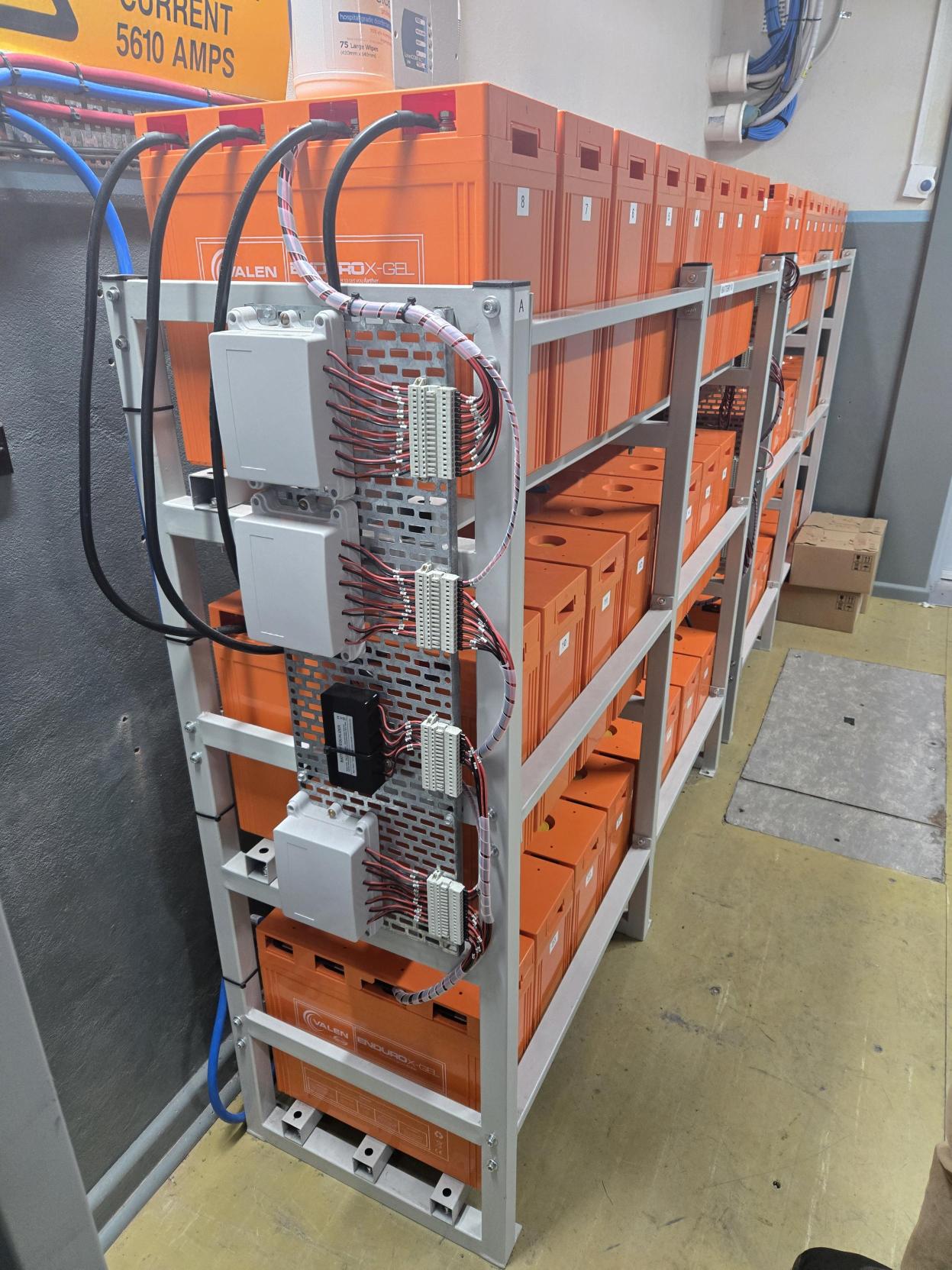
Replacing a UPS Battery Bank: How to Know It’s Truly Like-for-Like
A replacement UPS battery is only like-for-like if it matches the installed bank on discharge performance, electrical behaviour and physical fit, not just voltage and amp-hours on the label. When a UPS bank reaches end of life, the fastest option is to find a block that looks the same and drop it in. The risk […]
Articles
The main job of the Energy Management System is to make sure everytdiscussed and defined during Valen’s design stage.