Home / Front Terminal Batteries
Front Terminal Batteries
Front Terminal UPS Batteries for Telecom and Data Centres
To meet your power requirements and guarantee reliability, Valen is proud to offer both advanced AGM and Gel type VRLA Front Terminal batteries in 12V and 48V configurations.
But we’re not just about “selling batteries”. We’re here to work alongside you, solve your problems and provide ongoing support from our expert technical team.
If you’re unsure if VRLA Front Terminal battery technologies are right for your project needs, talk to the experts at Valen.
We proudly service clients all over Australia and New Zealand from a diverse range of industries. Click here to get in touch with us today.
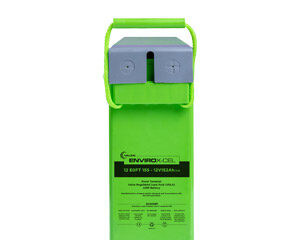
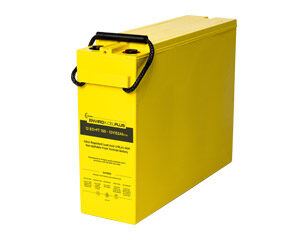
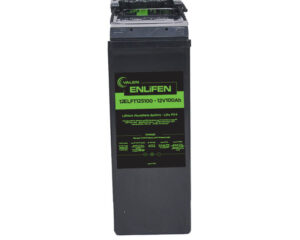
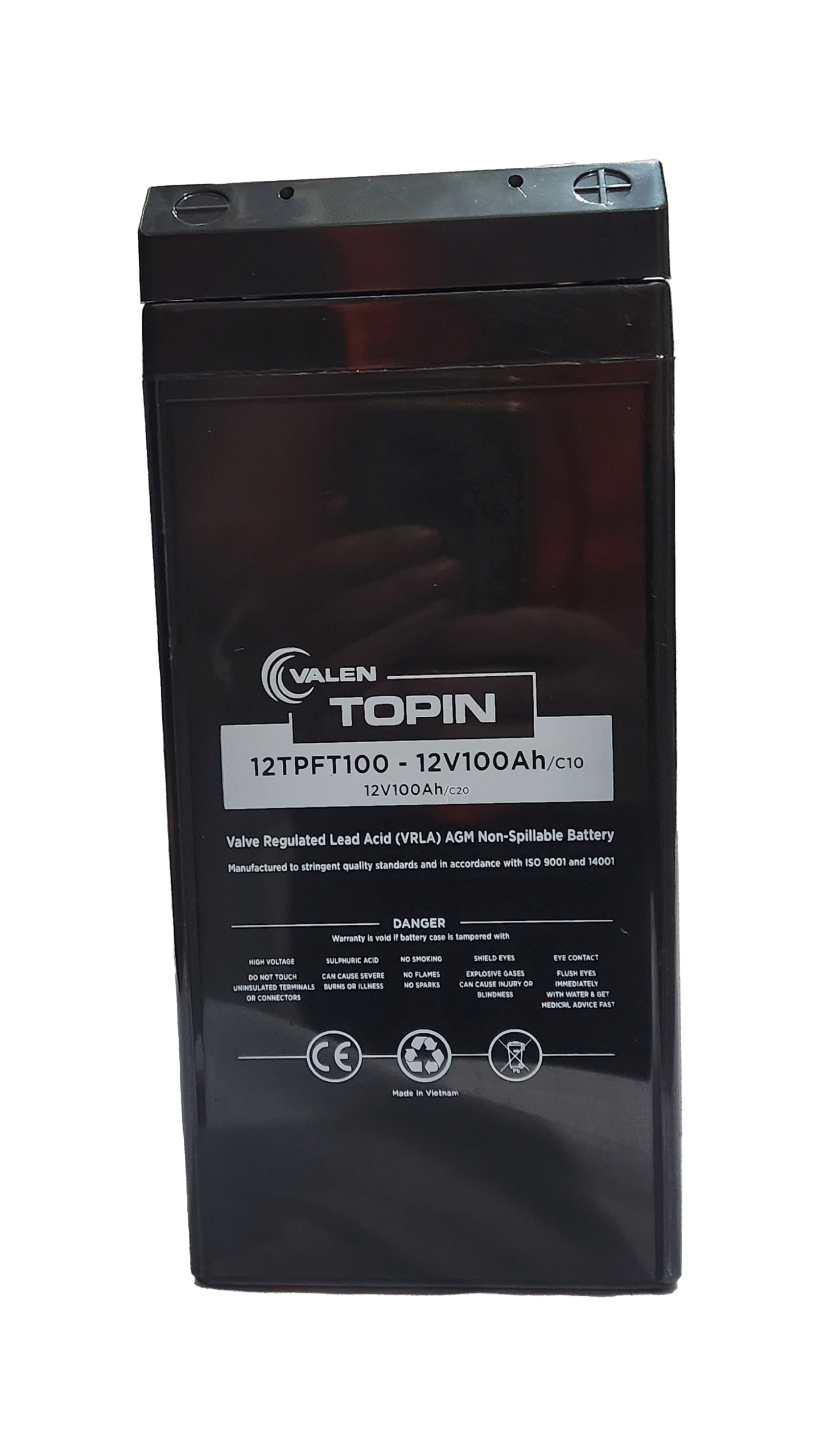
Front Terminal Batteries Range
Frequently Asked Questions
What torque should I use on front terminal battery connections?
Use the figure on the specification sheet for your specific model, and use a torque wrench. There is no universal value, it varies with terminal design, thread size and insert construction. Valen’s front terminal ranges are specified at 7 Nm (ENVIROX-CEL, ENVIROX-CELPLUS and TOPIN) and 10.3 Nm (ENDUROGEL).
Both errors cause failures:
Under-torqued connections have elevated resistance, which produces localised heating, accelerates terminal corrosion, and shows up in impedance testing as a fault that looks like a failing battery. Loose connections are one of the most common causes of “battery failure” that turns out not to be a battery failure at all.
Over-torqued connections strip or distort the terminal insert, which is not recoverable and usually voids warranty.
Practical points from the field:
- Terminal corrosion, cracked cases and electrolyte leakage are among the most frequently observed defects in Australian utility battery fleets, connection integrity is a maintenance item, not a one-time installation task.
- Re-torque at the first scheduled inspection after installation. Connections settle.
- Use an insulated torque wrench rated for the string voltage, and record the readings. On a bank where warranty may later be claimed, the record matters.
What warranty comes with a front terminal battery, and what voids it?
|
Range |
Warranty |
|---|---|
|
ENDUROGEL |
24 months |
|
ENVIROX-CEL |
24 months |
|
ENVIROX-CELPLUS |
24 months |
|
TOPIN Front Terminal |
24 months |
|
ENLiFEN Front Terminal |
36 months |
Extended warranty is available on request.
You will notice the gap between warranty and design life, 24 months against a 15-year design life on ENDUROGEL, for example. That gap is normal across the industry rather than unique to Valen, and it exists because the two things measure different risks: warranty covers manufacturing defect, while design life describes expected performance under specified conditions.
Australian specifiers for critical infrastructure routinely require both and treat them separately. A typical specification might ask for a design life over ten years alongside a twelve-month warranty. They are answering different questions.
What actually decides a claim is the conditions, so read those rather than the headline period:
- Ambient and cell temperature range the warranty assumes. This is where most claims fail. A long-design-life battery installed in a 45 °C cabinet has not failed prematurely in the manufacturer’s view. It has been operated outside the assumed conditions.
- Float voltage and temperature-compensation regime, and whether your charger actually delivers it. A charger without temperature compensation may itself be the reason a claim is declined.
- Evidence of a controlled charge regime. This is increasingly explicit in manufacturer warranty terms. Many manufacturers now require proof that the battery was operated within a controlled regime. Monitoring data is warranty evidence.
- Depth of discharge limits, and for lithium, throughput or cycle caps and battery management system firmware currency.
- Who bears freight and labour on a warranty replacement to a remote site. On a site four hours from a depot this can exceed the value of the battery.
- What documentation is required at claim time: commissioning records, discharge test results, monitoring logs, service history.
The most useful thing you can do at installation is start the evidence file: commissioning readings, baseline impedance, and the temperature record. It costs an hour and it is the difference between a complaint and a case.
4. SOLiCORE 48V 100Ah Semi-Solid State LiFePO₄ Rack Mount Battery
Page: https://valen.com.au/shop/lithium-batteries/valen-solicore-solid-state-lithium-batteries/valen-solicore-48v-100ah-solid-state-lifepo4-rack-mount-battery/ Questions: 17 · First six above the spec table URL stays as-is. No redirect required.
4.1 Two page edits required before the FAQ goes live
Edit 1, remove the following text from the product description:
“Solid‑State Safety: No liquid electrolyte, offering higher stability, no fire/smoke risk, and safer operation.”
Replace with:
“Semi-Solid State Safety: a composite polymer electrolyte with substantially reduced free liquid electrolyte, delivering higher thermal stability and improved abuse tolerance compared with a conventional lithium cell. Certified to IEC 62619, UN 38.3 and UL 1973, and tested to UL 9540A.”
Edit 2, replace “solid state” with “semi-solid state” in the visible body copy and headings on this page. The product name, the URL and the page slug stay unchanged; this is a body-copy change only. The FAQ below explains the distinction, which is deliberate. It is a credibility asset, not a concession.
4.2 Specification summary: please publish on the page
|
Parameter |
Specification |
|---|---|
|
SKU |
48ELSS100 |
|
Nominal voltage |
48 V system (51.2 V nominal) |
|
Capacity |
100 Ah, approximately 5.1 kWh |
|
Chemistry |
LiFePO₄ with composite polymer (semi-solid) electrolyte |
|
Form factor |
3U, 19-inch rack mount |
|
Dimensions |
517 mm × 442 mm × 133.5 mm |
|
Charge voltage |
57.6 V ± 0.8 V (56.8–58.4 V) |
|
Charge current |
20 A standard, 50 A fast charge |
|
Discharge current |
100 A continuous, 250 A peak for 2 seconds |
|
Discharge cut-off voltage |
40 V |
|
Charge temperature range |
0 °C to 55 °C |
|
Discharge temperature range |
−20 °C to 60 °C |
|
Storage temperature range |
−20 °C to 45 °C |
|
Low temperature performance |
Over 97% of discharge capacity at −20 °C |
|
Cycle life |
5,000+ at 100% DoD · 10,000 at 80% DoD |
|
Parallel configuration |
Up to 16 units |
|
Ingress protection |
IP54 metal case |
|
Communications |
2 × RS485, 1 × CAN, LCD display |
|
Certification |
IEC 62619, UN 38.3, UL 1973. Tested to UL 9540A |
|
Warranty |
5 years |
4.3 FAQ
How do I dispose of or recycle old batteries in Australia?
Industrial lead-acid is recycled through the established commercial scrap-lead route, which has been economically self-sustaining for decades because of the scrap value of lead. Practically, a supplier or a licensed recycler collects the old batteries and provides documentation. Valen Power is certified to ISO 14001:2015 for environmental management, covering the provision of industrial batteries, energy storage and training services.
Note what is not covered by the schemes people assume cover everything. B-cycle, Australia’s government-backed battery stewardship scheme, and the new NSW mandatory scheme under the Product Lifecycle Responsibility Regulation 2026, which commences 1 October 2026 and under which significant penalties apply, are both scoped to portable batteries: household sizes, button cells, removable rechargeable batteries under 5 kg, e-micromobility and power banks. Industrial stationary lead-acid is expressly outside both.
Industrial lithium is the genuine gap. There is no mandatory scheme covering a large lithium bank at end of life, and the dangerous goods requirements for damaged or end-of-life lithium make informal disposal legally hazardous rather than merely untidy.
What to ask any supplier, and what a well-run programme should provide:
- Documented take-back with a chain-of-custody record, not a verbal assurance that “we’ll take them away”.
- Correct classification, packaging and marking for lithium removals, especially where units are damaged or failed.
- A disposal certificate you can put in an environmental compliance file.
Can front terminal batteries be transported by air?
For Valen’s VRLA front terminal ranges, ENDUROGEL, ENVIROX-CEL, ENVIROX-CELPLUS and TOPIN, yes. The electrolyte is immobilised, the batteries are classified non-spillable and approved for air transport under IATA packing instructions, subject to correct packaging, marking and terminal protection. This matters more than it sounds for remote-site work, where the difference between air freight and road freight can be a week and a shutdown window.
For ENLiFEN lithium products the position is different and stricter. Lithium batteries are dangerous goods for air transport, classified UN 3480 or UN 3481, Class 9, and every cell or battery must be of a type proved to meet the tests in the UN Manual of Tests and Criteria, Part III, sub-section 38.3 before it can be transported.
Raise this early on any lithium project at a remote site: a failed or end-of-life lithium battery is a harder logistics problem than a working one. Damaged or defective units must be marked “DAMAGED/DEFECTIVE LITHIUM-ION BATTERIES” and packed to specific packing instructions. Batteries for disposal or recycling carry their own marking and packaging requirements. Different packaging, different marking, potentially a different carrier. Lead-acid has no equivalent burden. If you are specifying lithium for a site three hours from a highway, plan the removal at the same time as the installation.
How does temperature affect front terminal battery life in Australian conditions?
Temperature is the dominant variable in Australian industrial battery life, and it is under-modelled almost everywhere.
The relationship. EUROBAT states that float operation above 20 °C reduces VRLA life expectancy by approximately 50% for every 10 °C of sustained increase. Applied to a 15-year design-life battery: roughly 7.5 years at 30 °C, roughly 3.75 years at 40 °C. And once heat has damaged a battery, the lost capacity cannot be recovered. This is not a reversible derating.
Where this bites in Australia. Pole-top and pillar enclosures, roadside ITS cabinets, rail location cases and unairconditioned kiosks are sun-loaded, unventilated and routinely run internal temperatures far above the 20–25 °C at which design life is quoted. That is why they are the highest-churn small-battery population in most utility and road networks. AusNet’s field experience is that a 12-year useful life becomes “as low as 10 years” where the environment is not temperature controlled, and a zone substation kiosk is a much milder environment than a roadside cabinet.
Cold matters too, in the other direction. Capacity falls with temperature: AS/NZS 4509.2 provides derating curves for lead-acid from −10 °C to +40 °C with correction factors running roughly 60% to 105%. A bank sized for its nameplate capacity will underdeliver on a cold morning.
What to do about it, in order of effect:
- Measure the actual temperature in the enclosure, in February, at the terminals, not the ambient air temperature from the nearest weather station.
- Specify temperature-compensated charging. Non-negotiable in an uncontrolled environment.
- Address the enclosure. Australian road authorities have engineered around this explicitly: TMR’s MRTS213 requires double-skinned cabinets with thermostatically controlled fans and a heater, white heat-reflective paint to AS 2700, and internal temperature held between 0 °C and 50 °C.
- Then choose the battery, and derate the design life honestly for the temperature you measured, rather than quoting the 20 °C figure.
What C-rating are Valen’s front terminal batteries quoted at?
Always check the rate. A 100 Ah battery at C₁₀₀ is not a 100 Ah battery at C₁₀, and comparing two batteries at different rates is the single most common sizing error in this category.
The C-rating states the discharge period over which the capacity was measured. A battery rated 100 Ah at C₁₀ can deliver 10 A for 10 hours. The same battery rated at C₁₀₀ might show 120 Ah or more, because a slower discharge extracts more energy. Conventions by application:
|
Rate |
Typical use |
|---|---|
|
C₁₀ |
Larger stationary VRLA; also used for charger sizing under AS/NZS 4509.2 |
|
C₂₀ |
Smaller VRLA; general standby |
|
C₁₀₀ |
Low-load stand-alone power systems |
We publish both figures in the specification table above so you can see the effect directly: the ENVIROX-CELPLUS 190 Ah rates 205.2 Ah at C20, and the ENVIROX-CEL 155 Ah rates 167 Ah at C20. Most suppliers publish whichever number suits them. Comparing a nameplate figure against a C20 figure will mis-size a bank by ten per cent or more.
The second variable, equally important and more often omitted, is the end-of-discharge cut-off voltage. The same battery quoted to 1.75 V per cell and to 1.80 V per cell will show different capacities. Two suppliers can quote identical amp-hours at identical C-rates and still not be comparable if the cut-off differs.
For telecom applications there is a hard constraint here. ETSI EN 300 132-2 sets the normal −48 V interface range at −40.5 V to −57.0 V. With 24 lead-acid cells, the −40.5 V floor corresponds to about 1.69 V per cell at the equipment terminals, before distribution voltage drop. This is precisely why telecom reserve tables are quoted to 1.75 V or 1.80 V per cell rather than to a flat battery, and why “how many amp-hours” is the wrong question. The right question is how many minutes at my actual load, to my actual end voltage, at my actual cabinet temperature, at end of life.
Specifications
| Range | Chemistry | Product | SKU | V | Ah (nameplate) | Ah at C20 | L (mm) | W (mm) | H (mm) | Weight (kg) | Terminal | Torque (Nm) | Design life |
|---|---|---|---|---|---|---|---|---|---|---|---|---|---|
| ENDUROGEL | VRLA Gel, catalyst-enhanced | GEL Front Terminal 12V 100Ah | 12EGFT100 | 12 | 100 | 110 | 395 | 110 | 286 | 34 | M8 | 10.3 | 15 years |
| ENDUROGEL | VRLA Gel, catalyst-enhanced | GEL Front Terminal 12V 155Ah | 12EGFT155 | 12 | 155 | 150 | 550 | 110 | 288 | 50 | M8 | 10.3 | 15 years |
| ENVIROX-CEL | VRLA AGM, carbon-enhanced | AGM Front Terminal 12V 100Ah | 12EOFT100 | 12 | 100 | 108 | 398 | 110 | 286 | 33.2 | M8 | 7 | 12 years |
| ENVIROX-CEL | VRLA AGM, carbon-enhanced | AGM Front Terminal 12V 155Ah | 12EOFT155 | 12 | 155 | 167 | 550 | 110 | 285 | 49 | M8 | 7 | 12 years |
| ENVIROX-CELPLUS | VRLA AGM, graphitic carbon blend | AGM Front Terminal 12V 100Ah | 12EO+FT100 | 12 | 100 | 114.5 | 400 | 110 | 286 | 33 | M8 insert | 7 | 15 years |
| ENVIROX-CELPLUS | VRLA AGM, graphitic carbon blend | AGM Front Terminal 12V 170Ah | 12EO+FT170 | 12 | 170 | 183.6 | 557 | 125 | 316 | 57 | M8 insert | 7 | 15 years |
| ENVIROX-CELPLUS | VRLA AGM, graphitic carbon blend | AGM Front Terminal 12V 190Ah | 12EO+FT190 | 12 | 190 | 205.2 | 557 | 125 | 316 | 59 | M8 insert | 7 | 15 years |
| ENLiFEN | LiFePO₄ | Lithium Front Terminal 12V 125Ah | 12ELFT125100 | 12.8 | 125 | , | 394 | 110 | 286 | 13 | M8 | Refer datasheet | 6,000 cycles at 80% DoD |
| ENLiFEN | LiFePO₄ | Lithium Front Terminal 12V 200Ah | 12ELFT200150 | 12.8 | 200 | , | 550 | 110 | 288 | 20 | M8 | Refer datasheet | 6,000 cycles at 80% DoD |
| ENLiFEN | LiFePO₄ | Lithium Front Terminal 48V 75Ah | ELFT4875322 | 48 | 75 | , | 530 (560 incl. handles) | 125 | 330 | 34 | M8 | Refer datasheet | 6,000 cycles at 80% DoD |
| TOPIN | VRLA AGM | AGM Front Terminal 12V 100Ah | 12TPFT100 | 12 | 100 | 100 | 507 | 106 | 235 | 31.3 | F18 | 7 | 12 years |
- Nameplate capacity is the marketed capacity; the C20 figure is the 20-hour discharge rating from the specification sheet. For the AGM and gel ranges the C20 figure is often slightly higher than nameplate. Always compare batteries at the same rate.
- ENLiFEN nominal voltage is 12.8 V for the 12 V range and 48 V for the 48 V pack.
- Design life figures for the VRLA ranges are standby/float design life at a 20–25 °C reference condition. Service life in the field depends on operating temperature, see the design life question below.
- Terminal bolt torque: always use the figure on the specification sheet for your specific model. Under-torquing causes high-resistance connections and localised heating; over-torquing damages the terminal insert and voids warranty.
Ideal applications include


Benefits of VRLA Front Terminal Batteries
Installation of VRLA Front Terminal batteries into cabinets or racks tends to be very simple compared to other batteries. The battery terminals are located at the front of the battery. Therefore the terminals are easily reached and can be connected using a small interconnecting bar rather than various lengths of cables.
Maintenance is quick with the accessibility of the terminals being located at the front of the battery. Taking these readings from easy to reach terminals is a great advantage and a significant time-saving feature when compared to other batteries.
VRLA batteries are also maintenance-free and therefore do not require to be topped up with water.
- Very low/no gassing
- Minimal corrosion
- Easy maintenance
- Ability to function well in high temperature and cyclic sites
- Air transportable – they can be shipped as non-dangerous goods
- Lower impedance
- Rugged/vibration-resistant
Construction of VRLA Front Terminal Batteries
All lead-acid front terminal batteries are constructed from positive and negative lead plates connected in series. The electrolyte can be in many forms and immobilised in different materials depending on the battery technology.
There are two main subtypes of lead-acid batteries – traditional flooded wet cell batteries and Valve Regulated Lead Acid (VRLA) batteries. Note – VRLA batteries are sometimes referred to as Sealed Lead Acid (SLA) batteries.
VRLA batteries are different to flooded wet cell batteries because they are designed in a way so they can be tilted without leaking acid. Another essential feature of VRLA batteries is the valves which sit at the top above the battery to release gas as the battery pressure increases.
There are two primary types of VRLA front terminal batteries available – AGM (Absorbent Glass Mat) and Gel. Both AGM and Gel batteries have the same container, plates and pressure relief valves. The difference comes down to the type of separator used which sits between the lead plates. Each type of separator has certain advantages and disadvantages when used in different applications. The plates thickness, quantity and structure, differs between these battery technologies.