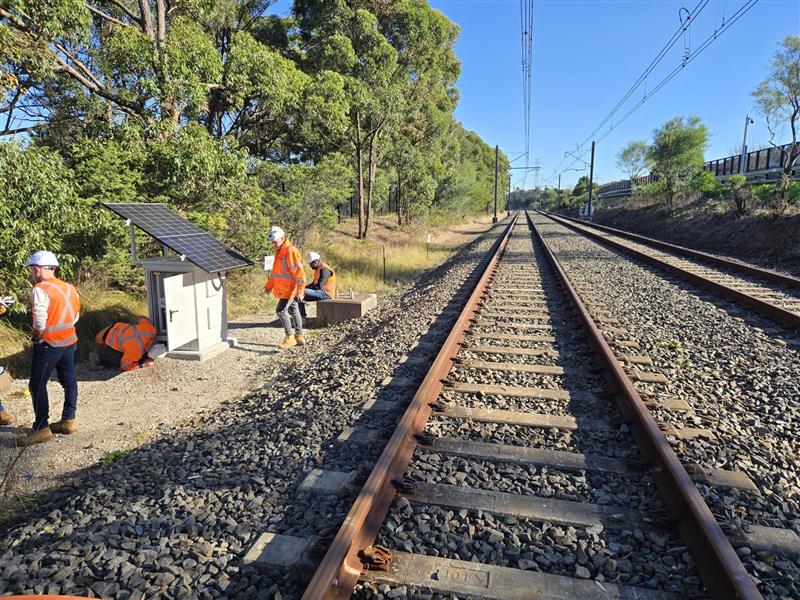
Rail Power Solutions for Signalling and Trackside Infrastructure
When a signalling battery fails, so does every train behind it
Signalling, level crossings, hot axle and wheel bearing detection, communications and trackside cabinets all depend on backup power that can be trusted. When it fails, a single site fault becomes service delays, corridor disruption and safety risk. Valen sizes batteries, chargers and power systems around the real application, not just the cabinet.Â
Distributed by Nature
Distributed by nature, unforgiving when it fails
Rail infrastructure is spread trackside, across depots and along corridors where access is limited and response time matters. A weak battery bank or underperforming backup leaves operators exposed on safety systems, network availability and maintenance planning. Valen supports rail operators, infrastructure managers and contractors where reliability, service life and fit-for-purpose design are not negotiable.Â
Where Valen Creates Value for Rail
More than a battery. A power system built around the application.
Protect critical trackside systems
Backup power for signalling, level crossings, detection equipment and communications assets needs to perform when the network depends on it most. Valen sizes batteries, chargers, UPS and power systems around the real application, not just the cabinet footprint.
Reduce unplanned maintenance pressure
A battery failure in rail infrastructure can trigger urgent field response, delays and investigation. Valen supports planned replacement, reliable battery selection and power upgrades that reduce avoidable surprises.
Support new projects and upgrades
From rail construction packages to signalling upgrades, corridor works, metro expansions and regional improvements, Valen supports both component supply and project-specific power systems.
Transport applications we support
Power matched to the asset it keeps online
Signalling power backup
Battery and charger solutions for signalling cabinets, control equipment, trackside assets and critical systems that need reliable standby power.
Hot axle & wheel bearing detection
Power solutions for detection assets that monitor rolling stock condition and help protect operations from avoidable faults and disruption.
Depot & facility backup power
UPS and battery systems for depot facilities, maintenance environments, control rooms, communications equipment and critical electronics.
Level crossings
Backup power for level crossing control equipment, warning systems and supporting infrastructure where reliability is essential to safe operations.
Rail communications infrastructure
Battery backup and off-grid power for trackside communications, radio systems, network cabinets, telemetry and remote communications assets.
Temporary & project site power
Deployable and stand-alone power for contractors working on construction, maintenance, signalling upgrades, testing or temporary infrastructure.
Frequently Asked Questions
Are Valen batteries type-approved for rail use in Australia?
Yes, for the specified products. Transport for NSW Asset Standards Authority Type Approval TA 8045.1:2025, “Valen Power – 12 Volt Batteries”, covers the ENVIROX-CELPLUS Carbon Front Terminal range in 100 Ah, 170 Ah and 190 Ah (12EO+FT100, 12EO+FT170, 12EO+FT190). Discipline: Signals and control systems. Mode: Rail (Heavy Rail). Effective 8 December 2025.
This matters more than it may appear, because rail procurement runs a type approval gate on top of the national standards. A product can comply with every applicable standard and still be unacceptable if it is not on the relevant infrastructure manager’s approved materials register. ARTC, for example, requires prototype approval and factory acceptance testing for new or modified designs, and states a procurement preference for products already proven in similar signalling applications.
Practical advice if you are a contractor mid-tender: confirm the register entry before you price the product, and check which edition of each standard the specification cites, several rail and road authority specifications still reference superseded editions.
What voltages do Australian rail signalling systems use?
AS 7703, the national railway signalling power supply standard, sets the conventions: 50 V DC for signalling logic and interlockings, 24 V DC for electronic equipment, 12–15 V DC for level crossing and legacy equipment, and 110/120 V AC for main distribution. ARTC’s level crossing standard specifies 12 V and/or 18 V nominal DC systems with 240 V single-phase AC. Individual rail infrastructure managers add their own network standards on top, so the governing document for any given site is the RIM’s functional specification, not the national standard alone.
How long must signalling battery backup last?
For active level crossings, the most quotable Australian figure is from ARTC ESC-03-01 clause 5.3: batteries must operate the level crossing protection, control and train detection equipment, plus any signalling fed from that location, for a minimum of 48 hours with 10% residual capacity under average traffic densities. Note two subtleties that affect sizing: the 48 hours covers the whole location’s load, not just the flashing lights, and the 10% residual means design capacity is effectively 48-hour load ÷ 0.9 before temperature and ageing derating. For other signalling assets, run time is project-specific, ARTC’s signalling power standard states it is defined for each project in the functional specification.
Nickel cadmium or VRLA for signalling, which and why?
NiCd tolerates a wider temperature range, deep discharge and long neglect better, which is why it persists in legacy signalling installations. Sealed gel VRLA is lower cost, needs no watering, is easier to handle and dispose of, and is explicitly permitted. The pragmatic position most Australian RIMs have reached is that sealed long-life cells should be used wherever possible, which is ARTC’s own wording, with NiCd retained where a specific installation or approval requires it. The deciding factors on a new installation are usually location-case temperature and the maintenance regime, not chemistry preference.
Can the charger recover a discharged bank while still carrying the signalling load?
This is the specification that separates a signalling charger from a general-purpose one, and it is worth asking explicitly. ARTC requires the charger to supply full load with the batteries removed, and to supply the normal operating load while recharging a fully discharged battery, restoring it to at least 75% of capacity within 10 hours. Also required: the charger or the battery must each be able to be isolated without interrupting the bus-bar supply, and the no-break DC supply must hold not less than 45 V DC on a 50 V nominal system. Ripple is specified at 1% or less.
How do I size a solar-powered signalling site?
AS 7703 clause 4.2.3 sets the method: battery storage shall be calculated to ensure power is available for the total period required, accounting for the maximum contiguous cloudy days at that location, battery capacity degradation over service life, and availability and reliability calculations. In practice that means three things a generic solar calculation omits: use the worst-month solar resource for that latitude, size to end-of-life capacity rather than nameplate, and apply the temperature derating for the location case rather than for ambient. A site that only just meets its autonomy requirement when new will not meet it in year eight.
Key Components and Systems for Rail
Choose by what the site needs
Systems for remote and stand-alone rail power, plus the components that keep standby and backup applications dependable. Everything available in one place.
Systems
Explore all Valen SystemsVantara Rapid
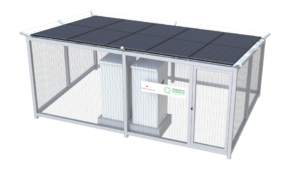
A repeatable, standardised remote power system that can be rolled out consistently across multiple rail sites.
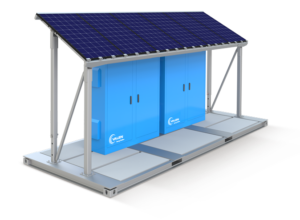
ModX
Modular solar, battery storage and energy management for larger remote or off-grid rail power requirements.
ModX1
Small-scale off-grid solar power for remote rail loads such as telemetry, monitoring, communications, detection and low-power trackside infrastructure.
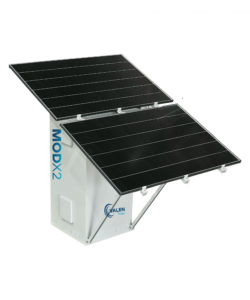
ModX2
A more capable pre-engineered solar battery for isolated rail assets.
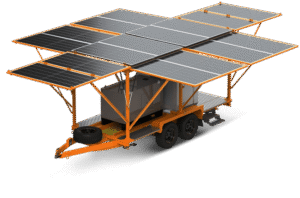
V-Trail
Towable hybrid towable hybrid for rail works, testing and recovery.
Vantara
Scalable stand-alone power with redundancy and monitoring for higher-value remote rail assets in harsh, hard-to-reach locations.
Components
Explore all Components
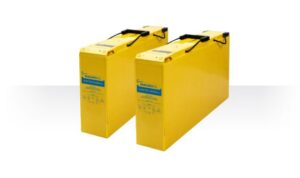
EnDuroGEL Batteries
Durable VRLA gel for demanding rail duty; front-access batteries for rail cabinets; longer service life/reduced replacement frequency for trackside standby.
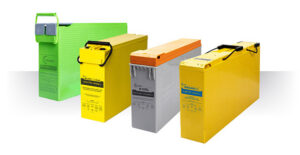
Front Terminal Batteries
For rail cabinets and standby applications where accessible installation and maintenance matter.
Lithium Batteries
Longer service life, improved energy density and reduced replacement frequency.
UPS Systems
Protection from power interruptions for control systems, communications and depot electronics.
Industrial Chargers
Reliable charging across standby, backup and project-based rail power applications.
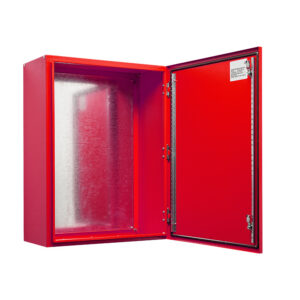
Enclosures & Racking
Protection for batteries and power equipment in field cabinets, depots and harsh rail environments.
Match the solution to the requirement
Signalling & level crossing backup
Dependable standby power with practical maintenance access.
Front Terminal
Chargers
UPS
Remote trackside assets
Smaller remote loads: detection, telemetry, monitoring, comms.
Modx2
Signalling & level crossing backup
Dependable standby power with practical maintenance access.
Vantara Rapid
Modx
Project, temporary & emergency
Mobile power for works, testing, recovery and upgrades.Useful reading
for rail teams
Case study
ModX1 for Sydney Metro Southwest
How Valen supported a modular lithium battery and solar power system for rail infrastructure.
System page
ModX1 Off-Grid Solar Power
A useful starting point for teams reviewing small-scale remote power for trackside applications.
Resource
What is a UPS system?
A practical guide for teams reviewing backup power protection for critical electronics and control systems.
Recent Case Study
What it costs to maintain a SWER line, and why SAPS is often cheaper
Single wire earth return lines exist because extending three-phase to a few remote customers never stacked up. But the marginal SWER line is not free: it is inspections, vegetation management, fault response, bushfire risk and replacement of ageing conductor, often to serve a handful of connections. A stand-alone power system can remove the line while […]
Servicing Clients Australia and New Zealand Wide
Valen Power partners with industry leaders across diverse sectors providing innovative energy storage solutions and unparalleled support to meet their unique needs.
Valen Resource Centre
The most comprehensive library of information about industrial batteries and energy storage anywhere.