Critical Communications Infrastructure

Keep every site online, so nobody has to make the 2am call

For telcos, public safety networks, WISPs, utilities and two-way radio operators, backup power is not a secondary system. It is what keeps coverage, coordination and critical services running when the grid becomes unreliable. Every tower, repeater, base station, exchange and fibre PoP depends on power that can be trusted.

Trusted by carriers, government radio networks and public safety operators across Australia, New Zealand and the Pacific. 

Heavier loads, ageing batteries, higher stakes

Communications sites are carrying more than ever. 5G rollout, higher data demand, fixed wireless expansion and public safety upgrades are all pushing harder on backup power, while the battery banks holding it up quietly age. Valen supports infrastructure owners, operators, integrators and maintenance teams with practical power that reduces outage risk, supports upgrades and simplifies field planning. 

Built for the field

The sites that keep networks running

Whether the site supports public safety, regional connectivity, field crews, utility operations or critical network coverage, the power system behind it needs to be sized, maintained and upgraded around uptime.

Telco towers & mobile network sites
GRN & PSN radio base stations
Emergency services communications
Two-way radio & repeater networks
Fixed wireless & WISP towers
Utility & water authority comms
Remote fibre, exchange & network sites
Defence & high-security comms
Off-grid & poor-grid field locations

01

Battery backup for critical sites

Replace ageing or underperforming battery banks with systems designed around the load, autonomy requirement and operational risk of each site.

02

Off-grid & poor-grid power

Support remote towers, repeater sites and regional assets where grid power is unreliable, limited or unavailable.


03

Upgrades for higher loads

As 5G, network consolidation and data demand grow, Valen assesses and upgrades battery and storage systems to match the real site load.

04

Planned replacement programs

Move from reactive battery replacement to a structured approach that reduces emergency callouts and unexpected site failures.

05

Remote site reliability

Build confidence across sites that are difficult, costly or time-consuming to access, where a failed battery means long outages and urgent field response.

06

Compliance-focused management

Support safer, more manageable replacement cycles as standards and battery disposal requirements continue to tighten across critical infrastructure.

Where Valen helps

More than a battery swap. A power system built around the site.

Application areas

Power built around how your network operates

Telco & national carrier infrastructure

Mobile network sites, regional towers, fixed wireless infrastructure, fibre points of presence and remote assets all rely on dependable backup power. Valen helps carriers strengthen site power as network demand grows, battery banks age and higher-load equipment increases pressure on existing systems.

  • Backup power for mobile and fixed network sites
  • Battery bank upgrades for higher loads
  • Off-grid or poor-grid site power
  • Remote site power reliability
  • Planned replacement programs across multiple sites
Review your comms power requirements

GRN & public safety networks

Government radio networks and public safety networks cannot afford power-related downtime. A failed battery at a radio base station or repeater site can create a coverage gap when emergency services, utilities, transport teams or field crews need communications most. Valen supports backup and off-grid power for GRN, PSN, P25, DMR and emergency communications infrastructure.

  • Battery backup for radio base stations
  • Power systems for remote repeater sites
  • Uptime support for emergency services communications
  • Backup power upgrades for ageing network assets
  • Off-grid power for regional and remote coverage areas
Assess your network power needs

WISP & regional connectivity sites

Fixed wireless providers and regional connectivity networks often operate across distributed tower sites where access, uptime and maintenance costs matter. Valen helps WISPs and regional operators improve backup power reliability, reduce outage risk and support expansion into remote or hard-to-service locations.

  • Backup power for fixed wireless towers
  • Off-grid power for remote connectivity sites
  • Battery replacement for ageing tower infrastructure
  • Power systems for new site builds
  • Reduced reliance on emergency field callouts
Start your comms power review

Utilities, water authorities & essential services

Utilities and water authorities depend on communications infrastructure to support field crews, telemetry, monitoring, operational control and emergency coordination. Valen provides battery and energy storage solutions for communications assets that support essential infrastructure across remote, regional and distributed networks.

  • Backup power for operational communications
  • Remote monitoring and telemetry site support
  • Power systems for distributed field infrastructure
  • Battery replacement for critical network assets
  • Reliability upgrades for high-priority service locations
Review your site requirements

Two-way radio networks & integrators

Radio network operators, critical comms integrators and infrastructure contractors need reliable power systems that can be specified into new projects, upgrades and maintenance programs. Valen supports two-way radio infrastructure with practical battery backup, off-grid power and energy storage for base stations, towers and repeater sites.

  • Power systems for project builds
  • Battery backup for base stations and repeaters
  • Support for maintenance and replacement programs
  • Off-grid power for remote radio infrastructure
  • Energy storage packages for critical comms sites
Submit your comms power requirements

Why communications teams work with Valen

Designed around uptime, built for demanding sites

Valen does more than replace batteries. We help teams plan backup power around site criticality, load demand, access limitations and the realities of field infrastructure.

Designed around uptime

Backup power planned around site criticality, load demand, access and uptime requirements, not just the battery footprint.

Built for remote sites

Systems designed for regional and hard-to-access assets, where avoidable site visits and emergency callouts are costly.

Systems and components in one place

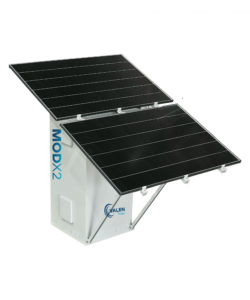
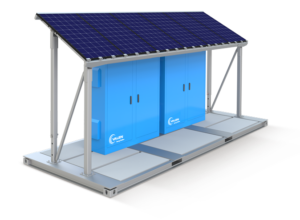
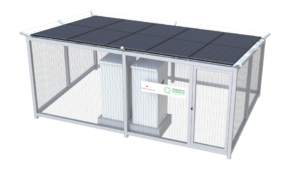
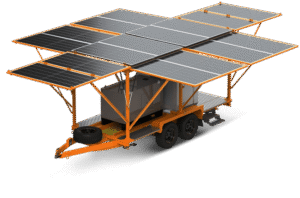
From complete stand-alone power systems to batteries, cabinets, chargers, UPS and solar components, Valen can support the full power requirement behind communications infrastructure.

Practical engineering

From battery bank sizing to off-grid system design, we determine what each site actually needs before recommending a solution.

Local knowledge

We understand Australian and New Zealand infrastructure: remote power, comms uptime and high-dependency field assets.

Future-ready planning

As networks expand and loads increase, we help operators move to scalable power infrastructure planning.

Frequently Asked Questions

Telecommunications standardised on a negative 48 V bus with positive earth, which reduces electrolytic corrosion of exposed and buried metalwork. ETSI EN 300 132-2 defines the normal service voltage range at the equipment interface as −40.5 V to −57.0 V, the upper figure derived from 24 lead-acid cells at 2.35 V per cell plus regulation allowance, the lower from cell end-of-discharge voltage plus distribution drop. Outside that range, from 0 to −40.5 V and −57 to −60 V, equipment must survive without damage but service may be interrupted.

There is no Australian regulation mandating a number of hours of battery backup at a telecom site, and this is widely misunderstood. The 2014 backup power determination was an information-disclosure instrument, not an engineering mandate, and it sunset on 1 October 2024. Subsequent ACMA rules concern outage reporting and consumer protection, not backup design. The one publishable Australian benchmark is the Commonwealth Mobile Network Hardening Program’s target of at least 12 hours for hardened regional base stations. Beyond that, reserve time is set by site criticality and restoration time, which is a design decision, not a compliance one.

Not the datasheet figure. Four adjustments have to be applied to a nameplate capacity before it means anything at a real site:

  • Your actual measured load, not the estimate
  • Your cabinet temperature, not 25 °C
  • End-of-life capacity, conventionally 80% of rated
  • The end voltage at the equipment terminals after distribution drop, which must stay above the −40.5 V floor That last constraint is why telecom reserve tables are quoted to 1.75 V or 1.80 V per cell rather than to a flat battery. Ask for minutes at your load, at your temperature, at end of life, not amp-hours.

It depends on temperature, cycling and access, and the honest answer is not always lithium. Lithium wins where the cabinet runs hot (VRLA life halves per 10 °C above 20 °C), where footprint or weight limits achievable autonomy, or where the site cycles rather than sitting on float. VRLA remains competitive for pure standby duty in a controlled environment, where no BMS is wanted in the DC path, and where the unrestricted transport classification matters for a remote site. Worth knowing as evidence rather than opinion: the 2021 Mobile Network Hardening rollout across 341 regional and remote base stations, 22 MWh, 12 hours of autonomy, designed for a minimum ten years, used gel VRLA, not lithium.

Often yes, but check five items before ordering: the rectifier’s charge profile and whether it has a selectable lithium setting; the DC bus window against a roughly 44–58 V lithium range; LVD and BMS coordination, setting the plant LVD above the BMS cut-off so load shedding happens before the battery disconnects itself; communications compatibility, remembering that the same connector does not mean the same protocol; and whether the rectifier manufacturer supports third-party lithium in their plant. This is the highest-value question in the vertical and almost every answer online is written for a recreational vehicle. /can-you-replace-vrla-with-lithium-in-a-48v-dc-power-system/

Generally no. Their float voltages and charge acceptance characteristics are incompatible, so a single charge regime under-charges the lead-acid or over-holds the lithium at full state of charge. For a staged programme, either separate the buses with independent charge control, or accept that one chemistry is operating outside its optimum and keep the transition period short. Plan the replacement bank-by-bank, not battery-by-battery.

Servicing Clients Australia and New Zealand Wide

Valen Power partners with industry leaders across diverse sectors providing innovative energy storage solutions and unparalleled support to meet their unique needs.

Valen Resource Centre

The most comprehensive library of information about industrial batteries and energy storage anywhere.

Case Studies

Enquire Now

Login Required

An account is required to add products to your cart, please login or register for an account.