Australia’s electricity networks are changing faster than ever. Coal fired power stations are being retired, rooftop solar keeps surging ahead, and customers still expect the lights to stay on, no matter what is happening on the wider grid.
Distribution Network Service Providers sit right in the middle of this change. Every day, they work to:
- Keep voltage within strict limits on solar heavy feeders
- Manage two way power flows and export constraints
- Support growing electrification of homes, businesses and industry
- Maintain reliability as traditional generation drops away
- Deliver projects quickly under tight budgets and regulatory pressure
Community batteries have stepped into the spotlight as one of the most powerful tools to address these challenges. When they are done well, they help soak up excess solar, relieve network constraints, support voltage, and unlock new ways to share value with communities.
But not every community battery is built for the real world of Distribution Network Service Providers.
Early deployments using generic containerised battery systems have revealed a long list of headaches. Noise problems have led to community complaints. Integration with SCADA and operational technology has been harder than expected. Cyber security has not always been treated as a first class requirement. On site work has taken longer and cost more than planned.
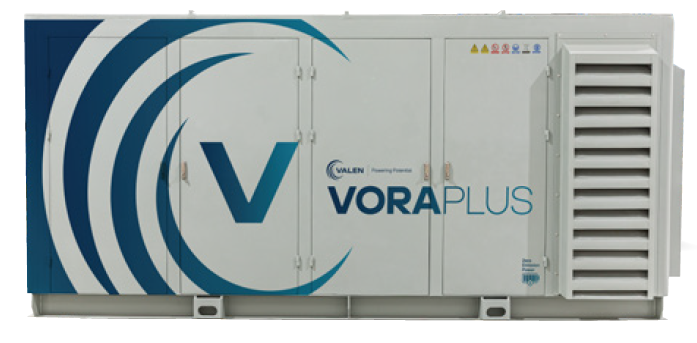
Valen’s VoraPlus community battery has been engineered from the ground up to solve those pain points.
VoraPlus is designed for DNSPs that need three things from energy storage:
- Quiet operation that fits comfortably into residential streets
- Secure control that aligns with modern OT and cyber security requirements
- Fast deployment so entire programs can scale without blowing out cost
This article walks through the real challenges DNSPs face, then shows how VoraPlus responds with a combination of acoustic engineering, integrated design, and a premium Energy Management System built for utility use.
DNSPs in a Changing Grid
To understand why a system like VoraPlus exists, it helps to look at the pressures on modern distribution networks.
Rooftop solar and two way power flows
Australia leads the world in rooftop solar uptake. On many feeders, daytime generation from residential and commercial solar already exceeds local demand. That creates familiar challenges:
- Voltage rising toward the top of allowable limits
- Reverse power flows through equipment that was never designed for sustained export
- Export constraints for customers simply to stay within technical limits
- Protection schemes that must now consider current in both directions
Community batteries located inside the distribution network offer a practical way to smooth out these effects. By charging during the middle of the day and discharging in the evening, they can:
- Reduce reverse flows and voltage spikes
- Support evening peak load locally
- Increase hosting capacity for new solar systems
But to do this effectively, the battery needs to sit close to the constrained part of the feeder. That usually means inside or near residential streets. Quiet operation and compact footprint are no longer nice to have features. They are central to whether the project can proceed.
Coal retirements and resilience
As coal assets retire, more of the system’s stability must come from inverter based resources and distributed assets. DNSPs are expected to maintain reliability for customers even as:
- Fault levels change
- Power flows shift
- System events ripple through the network in new ways
Community batteries can support local resilience by providing voltage support, local supply during short events, and controlled responses to network disturbances. To play that role, the battery system must be reliable, predictable, and easy to coordinate with existing protection schemes.
Community expectations and planning risk
Even when the technical case is strong, projects live or die on community acceptance. Local residents do not want humming boxes at the end of their street. Councils require compliance with acoustic, visual and safety conditions. Social licence matters.
If the first round of community batteries in a program attracts complaints about noise or appearance, every future site becomes harder. Planners spend more time in consultation and redesign. Costs rise, and internal support for non network solutions can fade.
Operational complexity and fragmented technology
Inside the organisation, community batteries are supposed to make life easier, not harder. Yet some early systems have created new complexity:
- Separate vendor portals for batteries, inverters, HVAC, and security
- Mixed protocols that require custom integration work
- Inconsistent alarms and status information
- Limited visibility of non energy components that still matter for reliability
Operations and maintenance teams end up managing each site as a special case. Training becomes harder. Troubleshooting takes longer.
Cyber security expectations are rising
Community batteries are not just pieces of hardware on a pad. They are fully networked OT assets. They talk to SCADA, they handle controls, and in some cases they manage flows that connect to market facing systems.
That means they must:
- Fit within established security zones
- Support secure authentication and role based access
- Avoid uncontrolled cloud services for critical monitoring and control
- Be capable of patching and long term support
A modern DNSP cannot treat cyber security as an optional extra. Any community battery platform must respect that reality.
Where Early Community Batteries Fell Short
The idea of community batteries is sound. The problems have mainly come from technology choices and integration approaches.
Common issues with generic containerised systems include:
- Containers that were never engineered for quiet operation but simply adapted for batteries
- Cooling systems that generate noticeable fan noise, especially at night
- A patchwork of third party components inside the same enclosure
- Multiple portals and cloud services that sit outside the DNSP’s normal OT environment
- Longer than expected time on site to complete fit out and integration
- Difficulty aligning cyber security with internal policies
These experiences make network planners and executives cautious. They know community batteries have potential, but they cannot afford to repeat the same mistakes at scale.
Valen designed VoraPlus as a direct response to these challenges.
VoraPlus as a Community Battery Platform
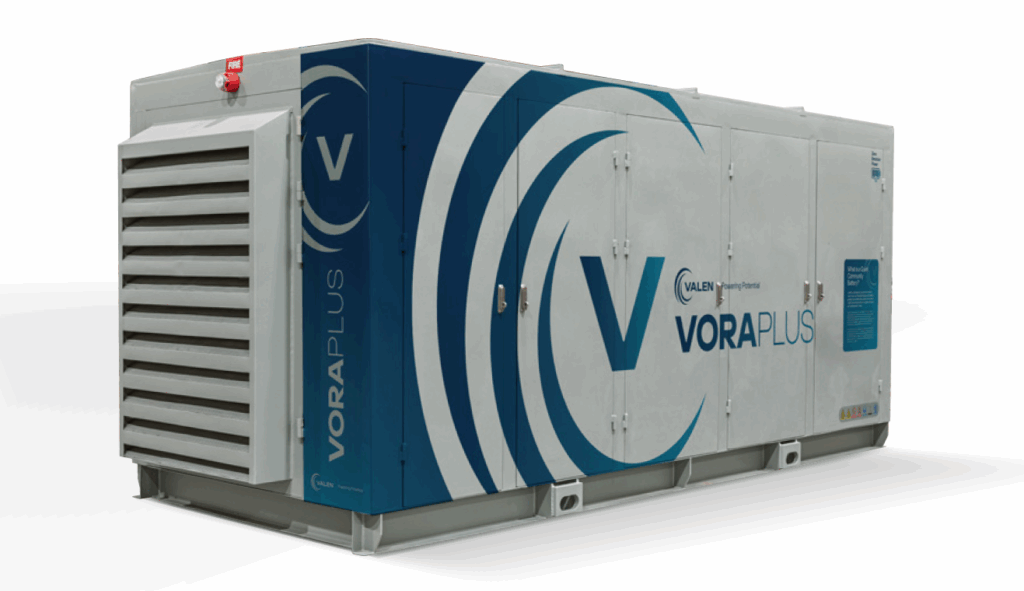
VoraPlus is Valen’s integrated community battery solution. Instead of starting with a shipping container, the system begins with a clean sheet and one purpose: deliver a quiet, secure, fast to deploy energy storage platform for DNSPs.
VoraPlus brings together:
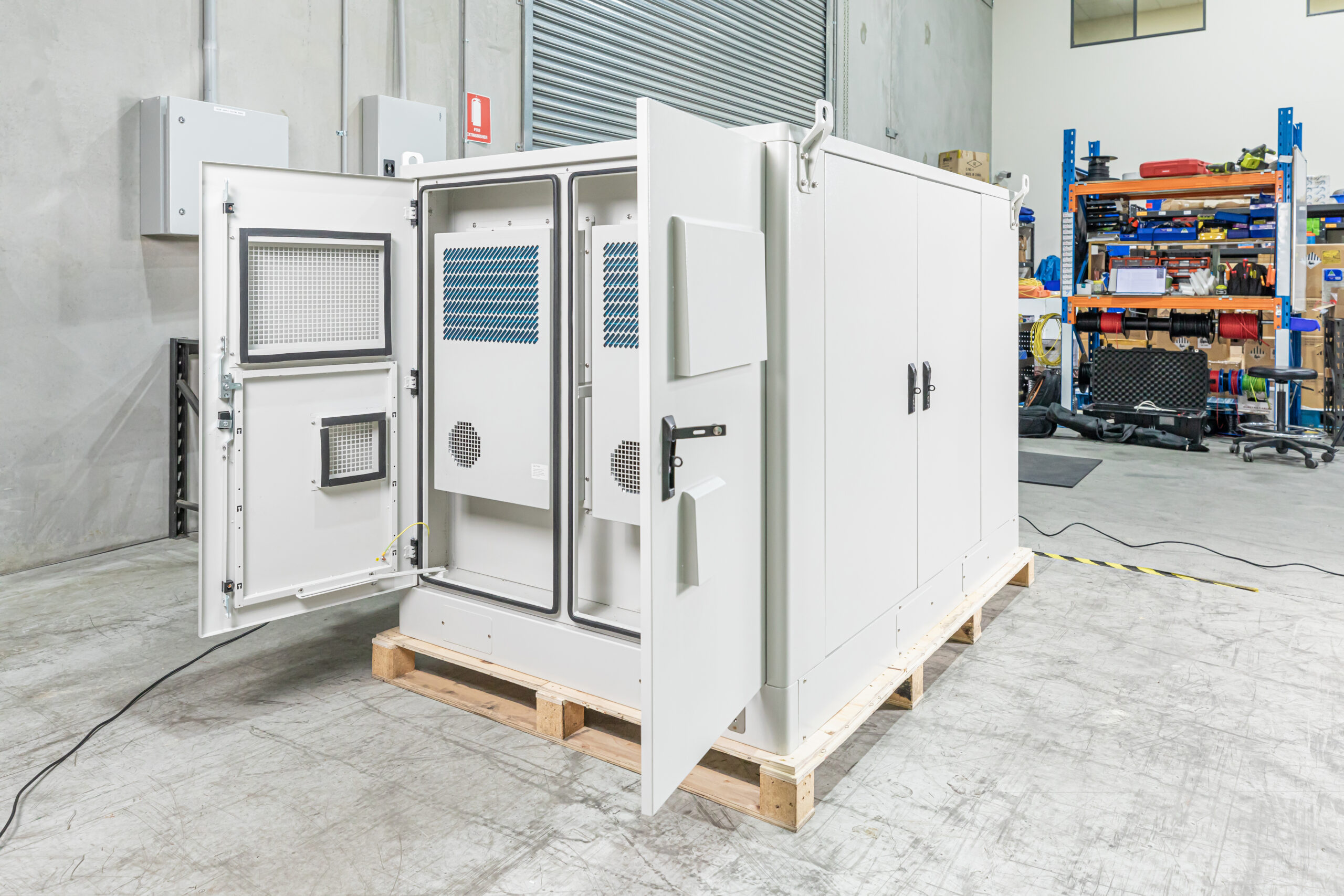
- A purpose designed enclosure with engineered acoustic performance
- Battery racks and inverters sized to community battery applications
- LV switchboard, protection and metering built into the same unit
- HVAC and environmental controls tuned for both cooling and noise reduction
- A premium Energy Management System that monitors and controls all key components
The result is a single unit that is delivered to site as an all in one asset rather than a loose collection of parts that must be assembled and integrated in the field.
Three pillars sit at the heart of the VoraPlus design.
- Quiet operation
- Fast deployment and simplified construction
- Secure, intelligent control through the EMS
Acoustics First: How VoraPlus Stays Quiet
Noise is one of the most visible and immediate risks for community battery projects. If a new installation hums or whirs loudly at night, the complaints will arrive quickly.
VoraPlus places acoustic performance at the core of the physical design.
Double wall enclosure with mass loading
The enclosure uses a double wall structure. Between the internal and external skins, acoustic treatments and additional mass reduce the transmission of sound. Instead of relying on thin steel walls, the design uses weight and layering to block and absorb noise from inverters, transformers and other components.
This approach is far more effective than simply placing acoustic panels on a standard container. It turns the entire enclosure into an engineered acoustic barrier.
Thoughtful placement of noisy components
Inside the enclosure, the layout of equipment is planned to keep the noisiest devices away from external surfaces and to interrupt direct paths for sound. Cable routes, access pathways and service clearances are all arranged while keeping noise in mind.
It is a detailed, practical kind of design work that only shows up months later when neighbours notice that there is no annoying hum.
Cooling and airflow designed with noise in mind
Cooling is critical for battery life, but fans and compressors can be a major source of noise when they are not considered at the design stage.
In VoraPlus:
- Air inlets and outlets are placed at the ends of the enclosure, using louvres and ducts that help shield the outside environment from direct fan noise
- Fans and cooling components are selected for a balance of performance and acoustic output
- Control strategies can modulate fan speed and operation so that the system runs quieter when full cooling is not required
The combined effect is a community battery that sits comfortably in residential environments without drawing attention to itself.
What quiet operation delivers for DNSPs
For DNSP teams, quiet operation has very practical benefits:
- Easier conversations with councils and planners
- Greater flexibility in site selection, so batteries can be placed where they deliver the most network value
- Fewer complaints after commissioning, which protects program reputation and reduces the need for remedial work
- Stronger social licence to expand the program into more communities
In other words, acoustic engineering is not just a technical extra. It is a major risk control for long term community battery strategy.
All in One Design for Fast Deployment
Speed of deployment is a major driver of cost and success for any community battery program. VoraPlus is built around the idea that a faster rollout is a cheaper rollout.
Factory built and tested
Instead of delivering an empty enclosure to site and filling it with components, VoraPlus units are:
- Assembled in controlled workshop conditions
- Wired and configured according to standard designs
- Put through factory acceptance testing that checks device communication, basic control logic and safety functions
By the time a unit leaves the factory, the major integration work between components has already been done. That removes a large source of uncertainty from site work.
Reduced civil and electrical complexity
On site, the work is focused and predictable:
- Prepare foundations and earthing
- Install conduit or trenching for cables
- Crane the VoraPlus unit into place
- Make electrical and communication connections
- Complete commissioning tests and SCADA integration
There is no need to coordinate multiple vendors completing separate fit outs inside the same container. The all in one design keeps responsibility clear and reduces the risk of delays.
Program level scalability
For DNSPs planning a program of many community batteries, this approach unlocks important benefits:
- Reusable design standards and work instructions
- Familiar hardware and EMS for crews and operators
- More accurate forecasting of time and cost per site
- Easier replication across different regions and teams
A repeatable, all in one design is what turns an interesting pilot into a realistic multi site program.
The VoraPlus Energy Management System
While the hardware delivers energy and physical performance, the Energy Management System turns VoraPlus into a controllable, dependable network asset.
Unified view of every component on site
The VoraPlus EMS is an agnostic monitoring and control platform that brings data from:
- Batteries and inverters
- LV switchgear
- HVAC units
- UPS and auxiliary systems
- Door sensors and access control
- Environmental sensors such as temperature and humidity
- Generators and other site specific devices
All of this information is brought together in a single dashboard. Operators can see state of charge, power flows, temperatures, alarms, and access events without leaving the platform.
For DNSPs managing dozens of sites, this unified view is a major step up from juggling multiple vendor portals.
Protocol bridging and SCADA integration
Distribution networks use a mix of communication standards. Field devices might speak Modbus RTU or Modbus TCP, while SCADA expects DNP3 or other protocols.
The VoraPlus EMS:
- Talks directly to field devices using their native protocols
- Translates and maps these data points into a protocol agreed with the DNSP
- Presents a clean, consistent set of points to SCADA
This bridging function means the DNSP does not need to build custom integration for each device. Instead, SCADA engineers work with a single, well defined interface at the site level.
Advanced control and FCAS capable operation
The EMS is designed not only for basic charge and discharge control, but also for more advanced strategies. It can:
- Follow scheduled operating profiles
- Respond to voltage or power constraints from the network
- Support fast response strategies such as frequency based actions
Where rules allow, this makes VoraPlus technically capable of supporting FCAS style services or other system support functions.
Even where a DNSP does not use those functions immediately, having an EMS designed for advanced control helps future proof the asset.
Flexible and adaptable
The EMS platform is built to evolve over time. It supports:
- New device drivers and protocols when equipment changes
- Updated control logic as the network’s needs change
- Additional input and output points for new sensors or controls
This kind of flexibility is vital in a grid environment where operating philosophies and regulatory expectations continue to move.
Cyber Security as a Core Design Principle
Modern community batteries cannot be considered separate from OT and cyber security architecture. VoraPlus recognises that and treats cyber security as a design requirement.
Alignment with DNSP security frameworks
The VoraPlus EMS is built to sit within a DNSP’s secure network. Key ideas include:
- Operating inside defined security zones rather than depending on uncontrolled external services for core functions
- Supporting single login and access control models aligned with the DNSP’s identity management systems
- Allowing different permission levels for operators, engineers and administrators
- Providing logs and events that can be integrated into security monitoring tools
This approach ensures the community battery does not become a blind spot in the OT security landscape.
Reduced attack surface through consolidation
By consolidating control and monitoring into a single EMS, VoraPlus avoids the sprawl of multiple vendor portals and unmanaged remote connections.
For security teams, this means:
- Fewer interfaces to monitor and protect
- Clearer ownership of patching and updates
- Easier enforcement of company wide security policies
A smaller, better controlled attack surface is always easier to defend than a loose collection of disconnected systems.
Practical DNSP Use Cases for VoraPlus
With the hardware and EMS foundations in place, VoraPlus becomes a versatile tool for DNSPs.
Voltage support on solar rich feeders
Network planners can deploy VoraPlus at strategic points on feeders with high rooftop solar penetration. Using EMS control strategies, the system can:
- Charge during periods of high solar output
- Discharge into the local network during evening demand peaks
- Help maintain voltage within allowable limits at critical nodes
This approach can reduce the need for strict export limits and help unlock more rooftop solar without major reinforcement.
Non network solutions for constraints
Where a line, transformer or substation is approaching capacity, VoraPlus can act as part of a non network solution. With careful modelling and control, the battery can:
- Discharge during peak periods to reduce loading on constrained assets
- Delay the need for expensive augmentation projects
- Improve utilisation of existing infrastructure
Because VoraPlus is quiet and compact, it can often be placed closer to the constrained area than noisier alternatives.
Supporting resilience and planned work
Operational teams can also use VoraPlus to help manage:
- Planned outages where temporary support is useful
- Short term events that would otherwise cause voltage dips or interruptions
- Special customer needs in sensitive areas
With full visibility through the EMS and SCADA, control room staff can incorporate the battery into switching plans and contingency strategies.
Enabling community and customer programs
Community batteries can underpin new customer offerings, such as programs that:
- Share benefits with households that cannot install solar
- Support renters or apartment dwellers
- Target low income customers for bill relief
Having a quiet, well presented battery in the local area makes it easier to explain and promote these initiatives. VoraPlus becomes not just a hidden piece of infrastructure, but a visible symbol of the network investing in the community.
Working with Valen on a VoraPlus Project
Technology matters, but so does the way it is delivered. Valen supports DNSPs through the whole VoraPlus lifecycle.
Planning and feasibility
Early in the process, Valen works with DNSP planners to:
- Understand network constraints and objectives
- Identify potential sites and discuss practical considerations
- Provide technical information, including acoustic performance and electrical characteristics
This helps build solid business cases and secure internal and external support.
Detailed design and integration
Once projects move forward, detailed work includes:
- Electrical design and protection coordination with existing assets
- Definition of SCADA integration and EMS protocols
- Alignment with cyber security frameworks and standards
- Civil, structural and environmental inputs for the site
Standard VoraPlus designs speed up this stage while still allowing DNSP specific tailoring.
Manufacture, testing and delivery
Units are then manufactured, wired and tested before shipment. Factory acceptance testing verifies:
- Device communication and EMS integration
- Operation of key control modes
- Safety functions and basic performance
Delivery and cranage can then be planned with confidence.
Commissioning, training and handover
On site, Valen supports commissioning and integration with SCADA. Training for operations and maintenance teams ensures that local staff are comfortable with:
- EMS dashboards
- Alarm handling and event logging
- Basic troubleshooting and escalation
After handover, DNSPs are not left to figure things out alone.
Ongoing support and optimisation
Over the life of the asset, Valen can assist with:
- EMS updates and configuration changes
- Remote diagnostics and support
- Advice on optimising control strategies as network conditions change
- Planning for future upgrades or expansions
This lifecycle partnership helps ensure VoraPlus continues to deliver value long after the ribbon is cut.
What DNSPs Should Look For in a Community Battery
When evaluating community battery options, DNSPs can use a few key questions as a filter.
- How has acoustic performance been engineered into the physical design, not just managed at the end?
- Is the system delivered as a truly all in one unit, or will field integration be needed at every site?
- Does the Energy Management System monitor and control all critical components, or only the battery and inverters?
- How easily can the EMS integrate with existing SCADA and OT networks, and which protocols are supported?
- What is the cyber security story, and how does it align with the organisation’s policies and standards?
- Is the platform capable of supporting advanced control strategies, such as fast response services, even if those are not used on day one?
- How repeatable is the design for a program of many sites, and what support is available over the full lifecycle?
VoraPlus has been shaped to give clear, confident answers to each of these questions.
Bringing It All Together
Community batteries are no longer just an interesting idea on a whiteboard. They are becoming real, funded projects that will sit in streets and communities across the country.
For DNSPs, the choice is not simply whether to use storage. The real choice is which storage platform will:
- Respect the amenity of the communities you serve
- Integrate cleanly and securely into your operational technology
- Deploy quickly enough to meet funding and regulatory timelines
VoraPlus is Valen’s answer to that challenge. It combines quiet, acoustically engineered hardware with an all in one design and a premium Energy Management System built for the way utilities actually work.
By choosing a platform that treats quiet, secure and fast as non-negotiable requirements, DNSPs can turn community batteries into a reliable, repeatable tool for managing tomorrow’s grid.
VoraPlus is designed to be that tool.