Understanding wind regions for solar installations is essential for ensuring system safety and compliance with Australian Standards. The wind region classification directly impacts the design and mounting of solar systems, especially in high-wind or cyclonic zones.
What Are Wind Regions in Australia?
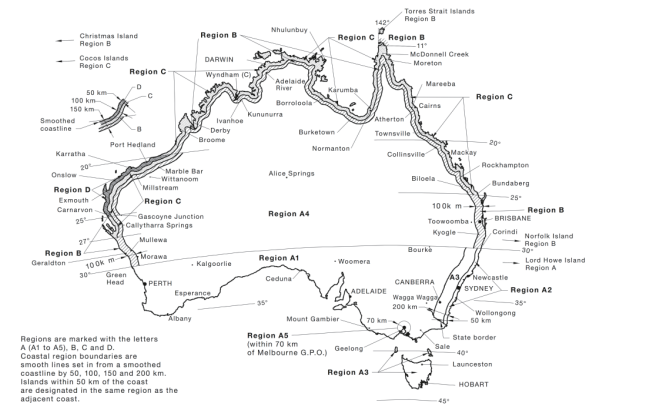
The Australian Standard AS/NZS 1170.2 defines four wind regions across the country. These classifications are independent of local terrain or buildings and are based solely on geographic location and wind velocity data.
Wind Region Classifications:
-
Region A (43 m/s):
Covers the majority of Australia. This region has a regional wind velocity of 43 m/s, with a recurrence interval of 200 years. -
Region B (52 m/s):
Found in some coastal and inland areas. Local building authorities can confirm if your site falls under this classification. -
Region C (64 m/s – Cyclonic):
Common in northern coastal areas. Cyclonic wind zones typically extend up to 100km inland. -
Region D (79 m/s – Extreme Cyclonic):
The most severe wind zone in Australia, located between Carnarvon and Pardoo Station in Western Australia.
Why Wind Regions Matter for Solar Installations
Selecting the correct wind region for solar mounting systems ensures structural integrity during extreme weather conditions. It also ensures your solar system complies with AS/NZS1170.2, which governs wind load assessments for buildings and structures.
Valen’s Solar Mounting Solutions Comply with Australian Standards
At Valen, our solar brackets and mounting systems are designed and tested in line with AS/NZS 1170.2 standards. We provide durable and compliant solutions for all wind regions, from standard zones to cyclonic areas.
Need Help with Solar Installations in Your Wind Region?
Contact Valen’s expert team to discuss your solar project and determine the correct wind region classification. Call us on 1300 734 253 or reach out via our Contact Us form.