
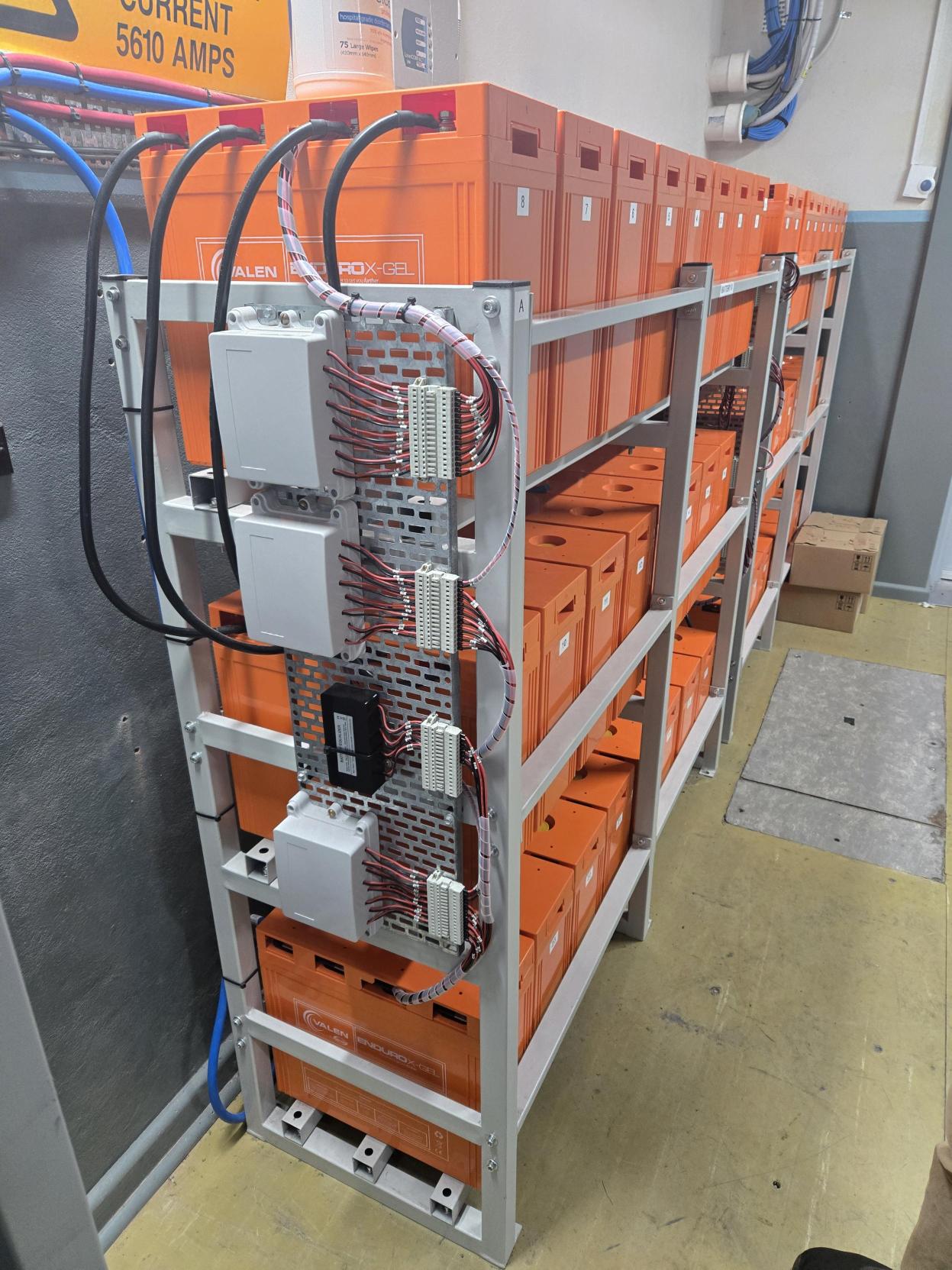



Most signalling and level crossing cabinets still run lead acid. The right choice depends on duty cycle, temperature, access and, above all, the cost of a failure, which in rail is unusually high. Here is the comparison.
Head to head:
| Factor | Lead acid / gel (VRLA, EnduroGEL) | Lithium (LiFePO4) | Solid state (SOLiCORE) |
| Upfront cost | Lowest | Mid | Highest |
| Service life | Shortest | Long | Longest [Valen to confirm] |
| Performance in heat | Degrades faster | Better | Best |
| Footprint / weight | Larger | Smaller | Smaller |
| Maintenance access need | Higher | Lower | Lowest |
| Best for | Easy-access, lower-criticality standby | Most signalling and crossing cabinets | The most safety-critical signalling and detection |
The rail-specific point:
Because a signalling failure cascades to every following train, the cost of a failure is not the battery, it is the delay, the investigation and the corridor disruption. That maths pushes hard toward longer-life batteries and planned replacement on the assets that matter most.
The decision:
Match battery to criticality and access. Lead acid or gel for easy-access, lower-criticality standby. Lithium for most cabinets. Solid state for the safety-critical loads where a failure is unacceptable.
The main job of the Energy Management System is to make sure everytdiscussed and defined during Valen’s design stage.
An account is required to add products to your cart, please login or register for an account.