Intelligent Transport Systems

Keep roadside assets online, and lane closures off the roster

Traffic controllers, roadside cabinets, variable message signs, CCTV, ramp metering and monitoring assets all depend on backup power that performs when the grid gets unstable. When a roadside asset drops out, it hits traffic flow, road safety, network visibility and incident response, and it usually means a callout, traffic management and after-hours work. 

Trusted by Transport for NSW and road infrastructure teams across Australia and New Zealand.

Exposed and hard to reach

Traffic Signal Battery Backup and Battery Backup for Traffic Lights

Transport infrastructure is spread across intersections, highways, tunnels and regional roads, much of it inside cabinets exposed to heat, dust, vibration and weather, with limited maintenance access. Valen supports road authorities, consultants, cabinet manufacturers and contractors with power that is easier to specify, deploy and maintain. 

Where Valen creates value for transport systems

Protect roadside visibility, fit project workflows, cut maintenance

01

Support approval-driven projects

Transport projects move through strict specifications, type approvals, cabinet standards and procurement pathways. Valen helps teams identify power solutions earlier in the design process, reducing rework and making procurement easier to plan.

02

Protect traffic control and roadside visibility

Traffic signals, controllers, monitoring devices and communications assets need dependable backup power to keep road networks visible and manageable. Valen matches batteries, UPS, chargers and components to the application, cabinet environment and expected runtime.

03

Reduce unplanned maintenance and site visits

Roadside assets are not always simple to access. A failed battery can mean traffic management, lane closures and after-hours work. Valen supports longer-term reliability through fit-for-purpose battery selection and practical component supply.

Transport applications we support

Power matched to the asset it keeps online

Traffic signal and controller cabinets

Battery backup, UPS and charging for traffic signal controllers, intersection cabinets and supporting roadside equipment.

Motorway and highway assets

Backup and off-grid power for ramp metering, lane control, traffic monitoring, CCTV, emergency phones, tolling support and motorway communications.

Detection, monitoring and sensors

Battery and solar-supported power for traffic counters, cameras, environmental monitoring, weigh-in-motion, vehicle detection and field instrumentation.

Variable message signs and driver information

Power for variable message signs, digital signage, warning systems and public road messaging that need reliable operation during outages or incidents.

Roadside communications and network cabinets

Power for fibre, radio, telemetry and communications equipment supporting intelligent transport networks.

Temporary traffic and project site power

Deployable and stand-alone power for road projects, motorway works, testing, temporary control systems and incident response.

Frequently Asked Questions

Four hours at full load is the effective Australian benchmark, and it is well sourced. Queensland TMR’s MRTS213 requires 4 hours at a 1400 W full test load. Australian traffic controller products in the SCATS ecosystem are built to roughly the same figure, around 4 hours at maximum load for both integrated and external UPS controller families. NZTA’s ITS UPS specification allows 1 to 8 hours determined per site as part of the installation design, based on criticality and fault response capability. Note this differs from the North American pattern, which typically splits full-operation hours from extended flash-mode hours.

Increasingly LiFePOâ‚„, and specified explicitly rather than permitted. TMR’s MRTS213 requires LiFePOâ‚„ with a minimum 10-year life, 4 hours at 1400 W, maximum 80% depth of discharge, 4-hour recharge from maximum DoD, in multiple parallel strings, rack mounted. NZTA permits lead-acid or LiFePOâ‚„ with minimum service lives of 5 and 10 years respectively. Main Roads WA Specification 713 requires maintenance-free batteries with a minimum expected life of 5 years and a maximum 8-hour charge time. The governing product standard across all of them is AS 5715:2015, UPS for roadside devices.

More than most people specify, and it usually matters more than the battery choice. TMR’s MRTS213 requires an IP-rated double-skinned enclosure with ventilation slots, thermostatically controlled fans and a heater, white (N14) heat-reflective paint to AS 2700, and an internal temperature held between 0 °C and 50 °C, with batteries low, controller above and switchboard at top. Main Roads WA requires internal temperature within ±10 °C of outside ambient within a 10–60 °C range, thermostat regulated. The 0 °C minimum with a heater is not incidental: it exists because LiFePOâ‚„ must not be charged below freezing, and both TMR and NZTA have engineered around that explicitly.

Those are the two ends of the same specification and both have to be answered. NZTA states it directly: required battery backup times “shall be met at a temperature of 0 degrees Celsius”, with reduced autonomy acceptable below that. At the hot end, TMR’s 50 °C internal maximum is the design ceiling. LiFePOâ‚„ handles both discharge extremes well, good products retain most capacity at −20 °C on discharge and do not follow the VRLA temperature-life curve at the top end. The constraint is charging below 0 °C, which is why the cabinet heater is a specification item and not an option.

This is now an explicit requirement in the better specifications and it is worth insisting on. NZTA requires that “replacement of any string shall not require removal of the complete UPS or other strings”, with plug-and-socket DC connections and Anderson-type connectors. TMR requires multiple parallel strings, rack mounted, which supports the same outcome. For a network of hundreds of intersections, string-level replaceability is the difference between a routine maintenance visit and a site shutdown with traffic management.

The bar has moved. Main Roads WA requires RS232/RS485 and Ethernet with an industry standard protocol, full web-server management over a secure connection, SNMP v2 or better, non-volatile logging with encrypted credentials, and a front panel displaying battery voltage, charge and discharge current and remaining autonomy time. NZTA now requires SNMPv3, ideally with DHCP, plus volt-free ELV alarm contacts. If you are specifying today, SNMPv3 is the ask, not v2, and “remaining autonomy time” on the front panel is a genuinely useful requirement worth copying.

Key components and systems for transport infrastructure

Choose by what the roadside asset needs

Off-grid and stand-alone systems for exposed roadside and motorway power, plus the batteries, UPS, chargers and enclosures that keep cabinet-based assets dependable. All in one place.

Choose the right power pathway

Match the solution to the requirement

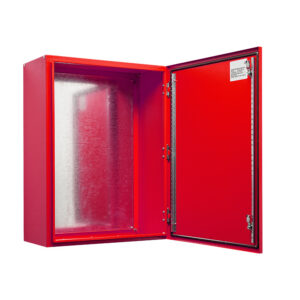
Traffic cabinets & controllers

Dependable backup inside a cabinet environment.
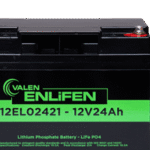
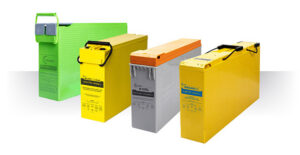
UPS Front Terminal VRLA Lithium

Remote roadside monitoring

Cameras, counters, sensors, telemetry and communications.
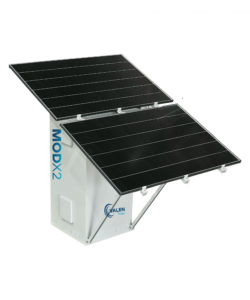
Modx1 Modx2

Temporary roadworks & projects

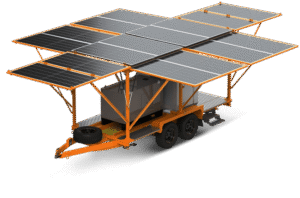
Mobile power for works, commissioning and incidents.
V-Trail

Larger ITS & motorway assets

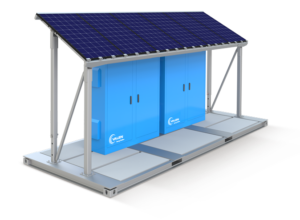
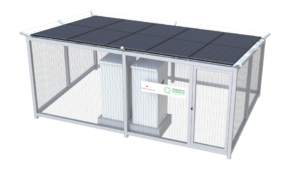
Engineered systems with solar, storage and scale.
Vantara Vantara Rapid
Why transport teams work with Valen

Built for roadside conditions and project workflows

Built around network uptime

Think beyond the battery to the full requirement: load, runtime, cabinet environment, access, replacement cycle and asset criticality.

Practical for roadside infrastructure

Assets are exposed to demanding conditions and often hard to access. Solutions suit the realities of roadside installation and maintenance.

Components and systems in one place

Individual component supply plus complete off-grid, UPS and stand-alone systems for project-based requirements.

Designed for specification workflows

From early design to procurement and deployment, helping consultants, cabinet manufacturers and contractors reduce project friction.

Case study

Proven in ITS and traffic infrastructure
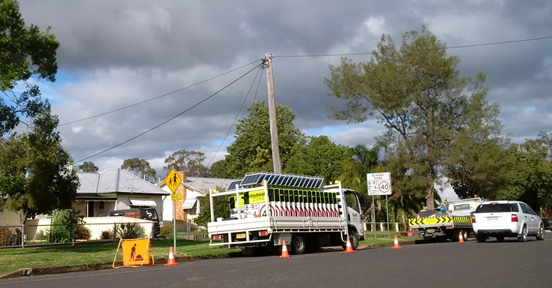
Transport for NSW solar and battery installation for ITS infrastructure

Case study

Transport for NSW — Solar & Battery Supply for ITS Infrastructure

Client Transport for NSW
Sector Intelligent Transport Systems
Completion July 2023
Supply Solar panels & batteries

Transport for NSW needed dependable solar and battery supply to keep ITS infrastructure running to project milestones. Valen supplied batteries and solar panels built to custom charging, labelling and bracket requirements, backed by a monthly schedule that rotated stock ahead of shelf-life expiry and removed supply chain risk across the length of the contract. On-call technical support was on hand throughout for troubleshooting. Every contract was delivered on time and within budget, with proactive scheduling cutting on-site call-out fees and sign failures by more than half.

Read the case study

Servicing Clients Australia and New Zealand Wide

Valen Power partners with industry leaders across diverse sectors providing innovative energy storage solutions and unparalleled support to meet their unique needs.

Valen Resource Centre

The most comprehensive library of information about industrial batteries and energy storage anywhere.

Case Studies

Enquire Now

Login Required

An account is required to add products to your cart, please login or register for an account.