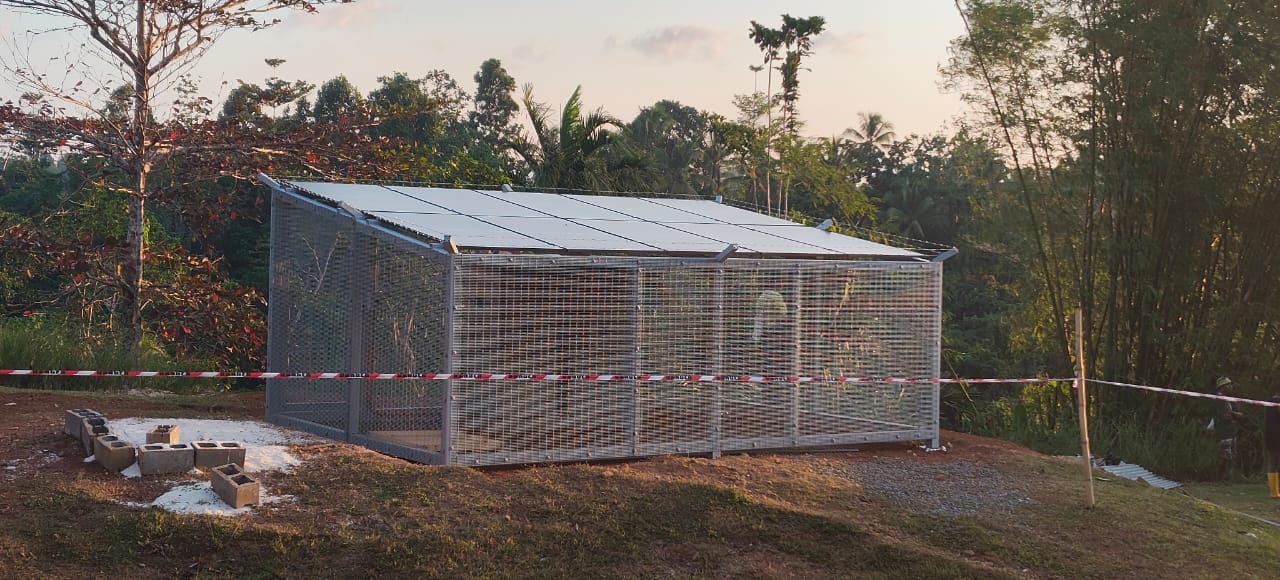
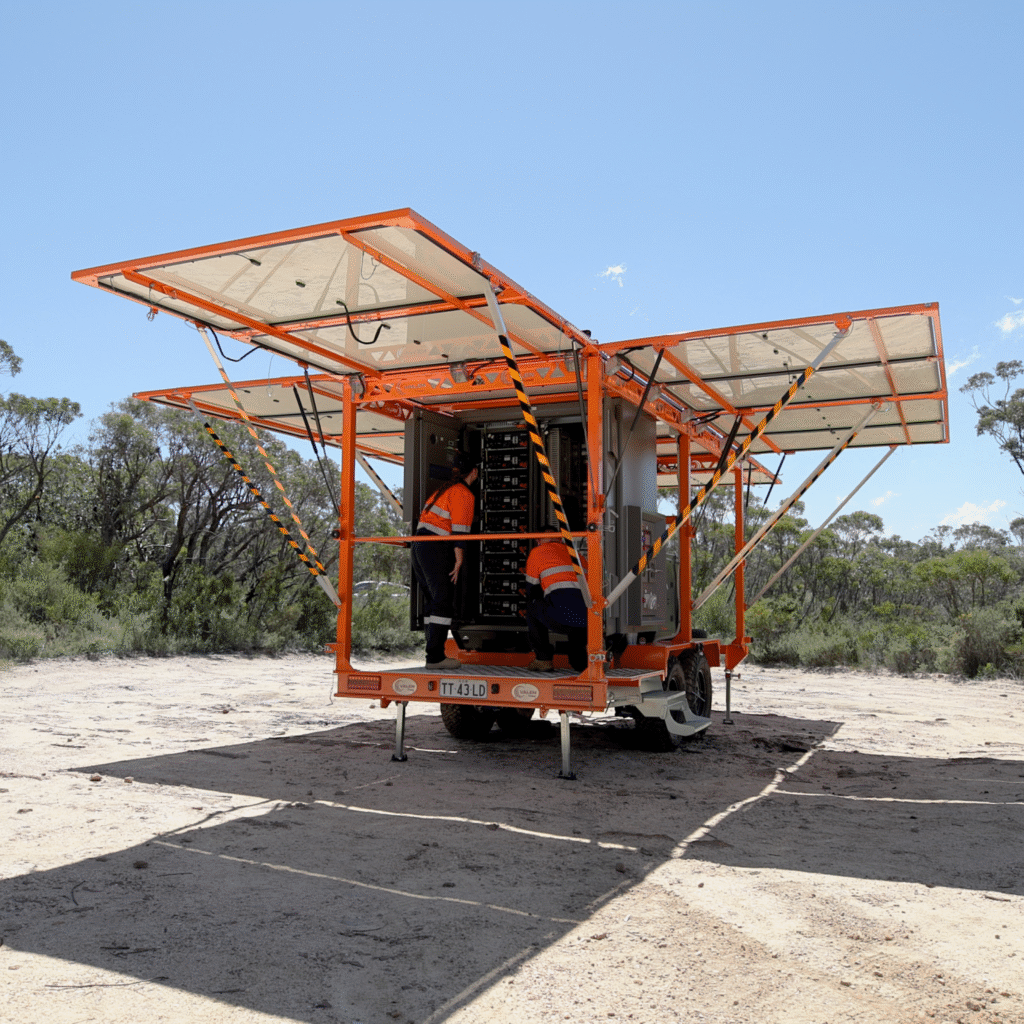
When a remote site needs its own power, the first decision is the platform: a towable trailer unit, a skid-based system craned or transported onto a prepared pad, or a compact enclosure system built for smaller, continuous loads. All three deliver solar and battery power, with diesel backup where the load calls for it. The right choice comes down to how much power the site actually draws, how often it moves, how you can access it, and how long the power needs to stay in place.
The short answer
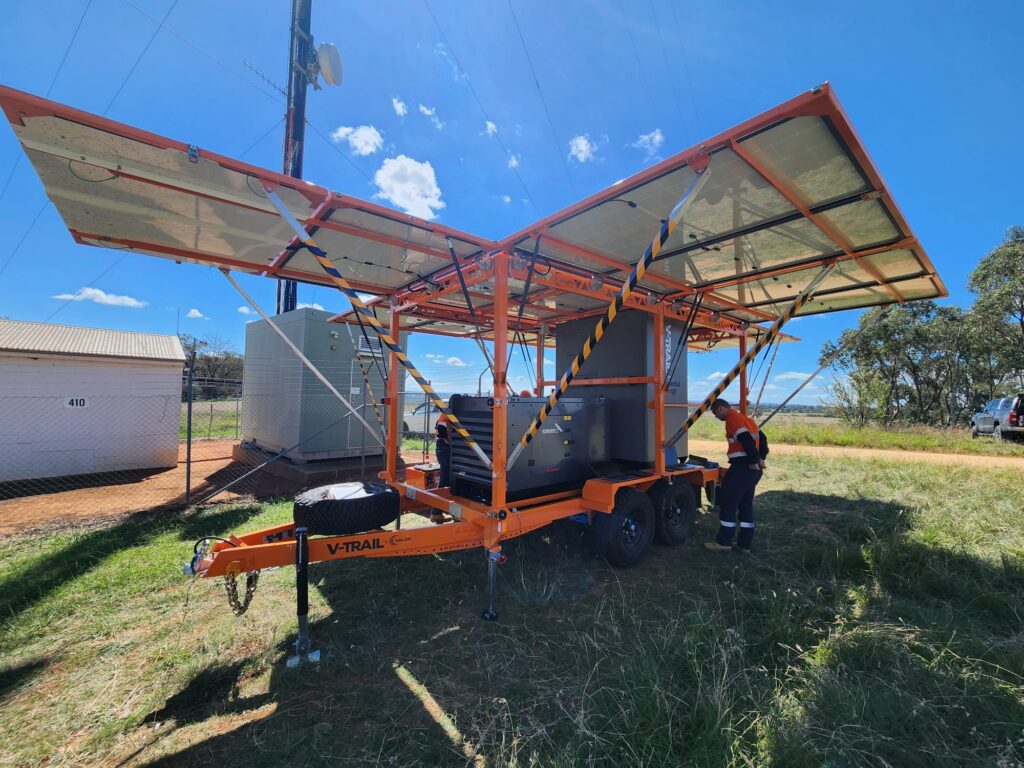
- Choose towable (V-Trail) when the site is temporary, moves often, or you need power deployed in days by one crew with a vehicle.
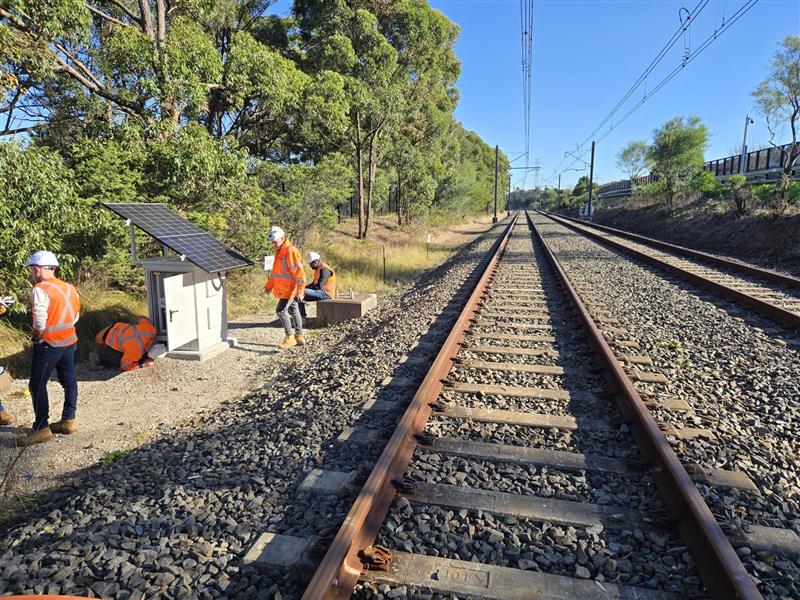
- Choose skid-based (Vantara) when the site is semi-permanent, the load is larger, and the unit will sit for months to years.
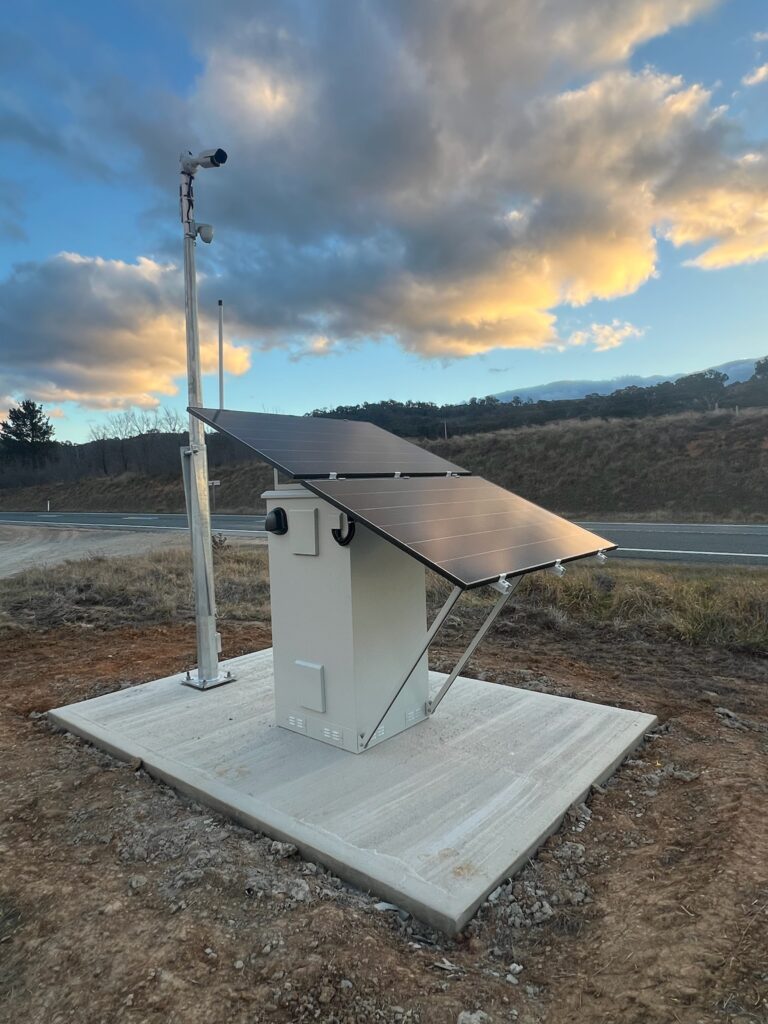
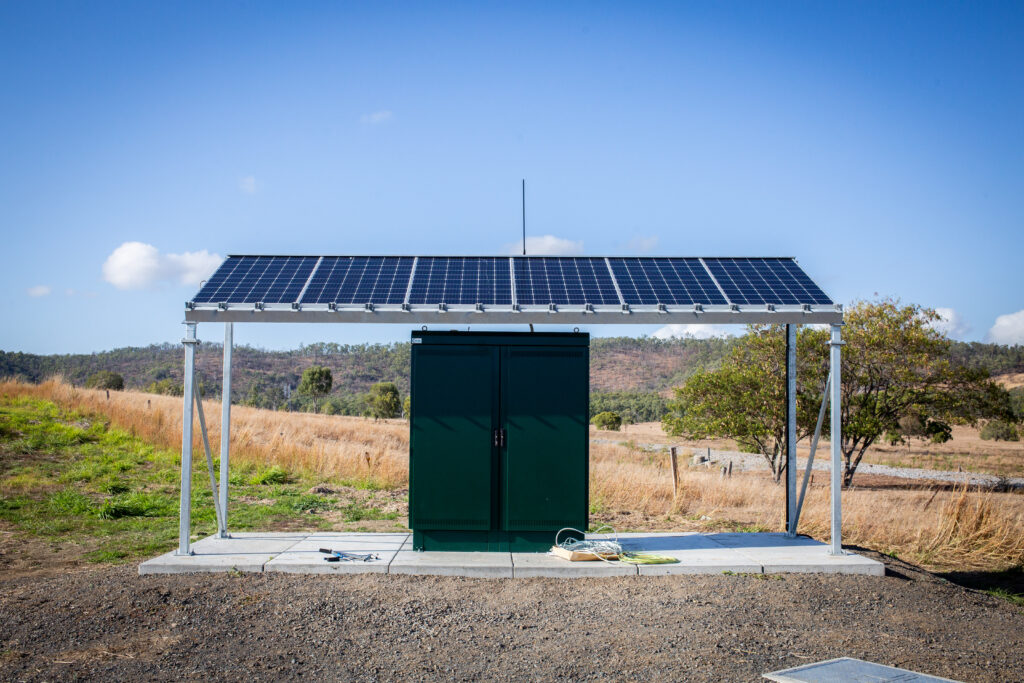
- Choose compact enclosure (ModX2) when the load is small and continuous — comms, lighting, monitoring or security — and the site doesn’t need a trailer’s mobility or a skid’s capacity, just a self-contained, unmanned power supply that can sit on a pad or pole indefinitely.
Head to head
| Factor | Towable (V-Trail) | Skid-based (Vantara) | Compact enclosure (ModX2) |
|---|---|---|---|
| Deployment speed | Days. Tow, level, deploy panels — under 10 minutes on site with two operators. | Longer. Needs transport, crane, prepared pad. | Fast. Factory pre-wired, pre-tested and certified before shipping; dispatch within a week, then bolt down and commission. |
| Mobility | High. Relocate with a vehicle. | Low. Designed to stay put. | Low–medium. Fixed once installed, but light enough to move without a crane. |
| Best for | Exploration, early works, emergency, camps, moving fronts. | Semi-permanent loads, larger sites, longer duration. | Unmanned, continuous small loads: comms towers, obstruction lighting, environmental monitoring, security, oil/gas and pipeline infrastructure. |
| Load size | Small to medium (8.16 kWp solar / 43 kWh storage). | Medium to large (12.9 kWp solar / 55 kWh storage, modular and expandable). | Small (990 Wp solar / 5.12–15.36 kWh storage). |
| Backup generation | 30 kVA diesel generator, 100 L tank. | Dual 30 kVA bi-directional inverters (60 kVA combined); no integrated genset in the base build. | None — solar/battery only, sized for low continuous draw. |
| Site prep | Minimal — level ground for the trailer. | Pad, access and lift planning, plus security fencing. | Minimal — small footprint (2183 × 850 × 811 mm), pad or pole mount. |
| Weight | Under 3,500 kg (dual-axle trailer). | Enclosure on concrete footings — a fixed, heavier installation. | Compact single enclosure, light enough for standard freight. |
| Relocation cost | Low. | High. | Low, but not designed for repeated moves. |
| Security/footprint | Compact, self-contained. | Larger footprint, more capacity, fenced compound. | Smallest footprint; stainless steel, fan-cooled enclosure with 3-point padlockable locking. |
How to decide, four questions
- Is the load small and continuous, with no one on site to manage it? Telemetry, lighting, monitoring or comms loads that just need to run 24/7 unattended point to ModX2 rather than a trailer or skid.
- Will this site move within 12 months? If yes, towable (V-Trail).
- Is the load beyond what a trailer carries? V-Trail tops out around 8.16 kWp solar and 43 kWh of storage with a 30 kVA diesel backup, at under 3,500 kg all-up. Beyond that — or where you need dual-inverter redundancy and expandable capacity from 55 kWh up — look at a skid or Vantara build.
- How fast do you need power? If it’s weeks-not-months urgent, ModX2 (stock availability, dispatch within a week, for small loads) or V-Trail (days, once on site) both beat a skid build, which needs transport and crane access to a prepared pad.
Where Valen fits
V-Trail covers the towable end. ModX2 covers small, continuous, unmanned loads in a compact, factory-built enclosure. Vantara and Vantara Rapid cover permanent and repeatable skid and enclosure builds — from a pre-engineered 5.1 kW / 21.48 kWh entry system up to fully modular 12.9 kWp / 55 kWh (and beyond) installations. Because all three come from Valen, you get one supplier who will tell you honestly which platform suits the site, and support any of them for the life of the asset.
| Parameter | V-Trail (towable) | ModX2 (compact enclosure) | Vantara (skid-based, base build) |
|---|---|---|---|
| Solar | 8.16 kWp | 990 Wp | 12.9 kWp (20 × 589 Wp panels) |
| Battery storage | 43 kWh LiFePO₄ (nine 4.8 kWh modules) | 5.12 / 10.24 / 15.36 kWh LiFePO₄ (options) | 55 kWh LiFePO₄ (eleven 5 kWh modules) |
| Backup generation | 30 kVA diesel genset, 100 L tank | None (solar/battery only) | Dual 30 kVA bi-directional inverters (60 kVA combined) |
| Inverter / charge control | Bi-directional inverter, up to 35 kW MPPT charge power | Victron BlueSmart MPPT 100/20, 98% peak efficiency, Victron VRM monitoring | 2× solar charge controllers, 35 kVA combined, 99.9% MPPT efficiency; Vonnect EMS monitoring |
| Footprint / weight | Dual-axle trailer, under 3,500 kg | 2183 × 850 × 811 mm enclosure | Enclosure on concrete footings, security fencing |
| Deploy time | Under 10 minutes on site with two operators (panels deployable solo via gas strut) | Factory pre-wired, tested and certified; dispatch within a week | Longer — requires transport, crane and a prepared pad |
| Typical use | Exploration, early works, emergency and moving-front camps | Comms, obstruction lighting, environmental monitoring, security, oil/gas/pipeline | Rail signalling, telco, mining, distribution network, UPS/backup for critical loads |
Note: Vantara Rapid’s two pre-engineered options (5.1 kW PV / 21.48 kWh and 10.2 kW PV / 42.96 kWh, both with a 5 kVA inverter) sit between ModX2 and a full custom Vantara build, for sites that need more than ModX2 but don’t warrant a bespoke skid design.


