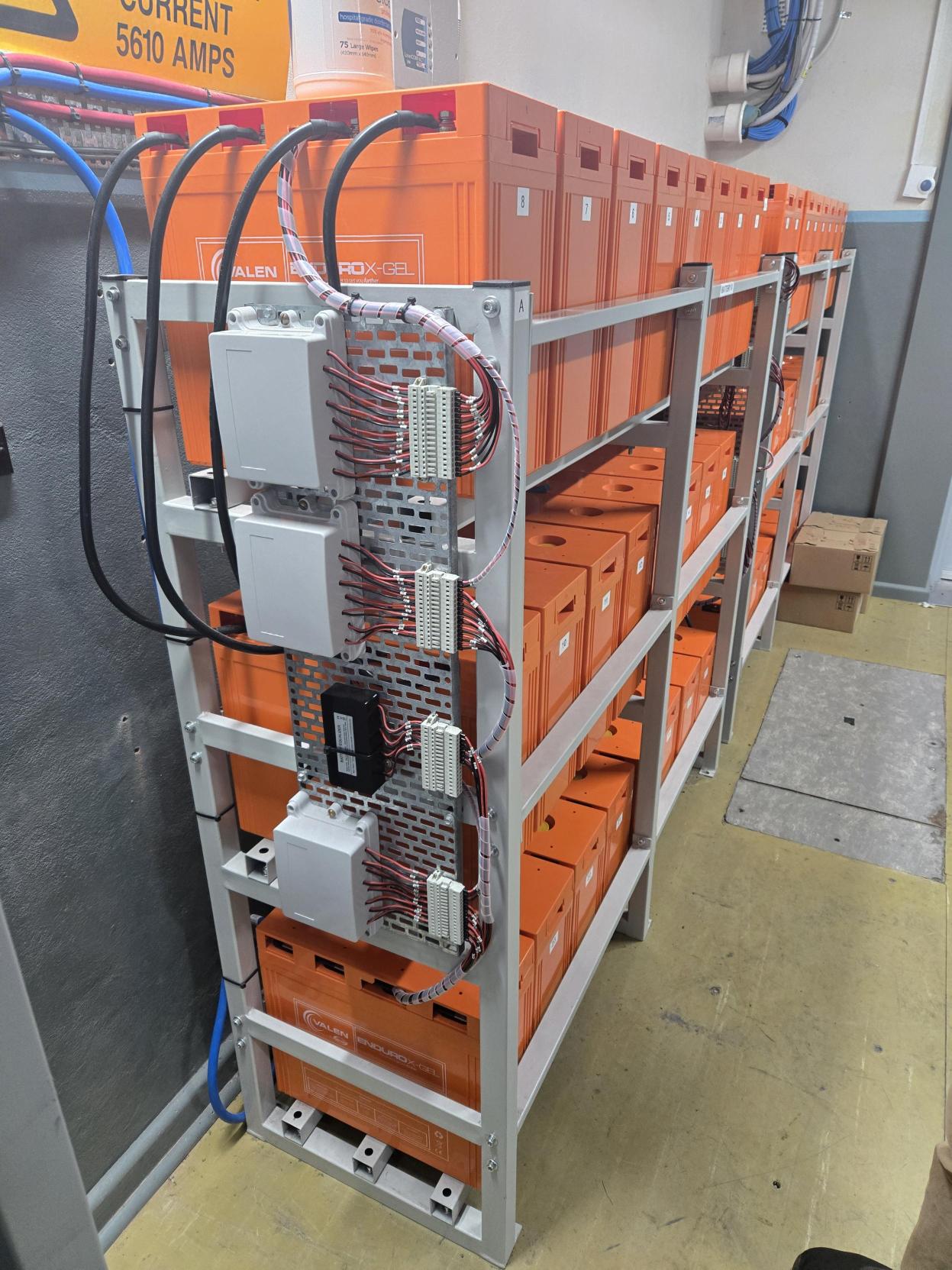
Choosing the right fire system battery is not just a technical decision. It directly impacts whether critical systems will start and operate during an emergency.
One of the most misunderstood areas in battery selection is the difference between:
- Cold Cranking Amps (CCA)
- Ampere Hours (Ah)
Many assume they are interchangeable. They are not.
Understanding how these two ratings work is essential to ensure fire system compliance, reliability, and safety.
What is Cold Cranking Amps (CCA)?
Cold Cranking Amps (CCA) measures how much power a battery can deliver instantly in cold conditions.
Specifically, it refers to:
- The number of amps a battery can supply
- At -18°C for 30 seconds
- While maintaining minimum voltage
In simple terms:
👉 CCA = starting power
The higher the CCA rating, the more power the battery can deliver immediately on startup.
What is Ampere Hour (Ah)?
Ampere Hour (Ah) measures how much energy a battery can deliver over time.
It represents:
- The total capacity of the battery
- How long it can sustain a load
👉 Ah = endurance
For example, a higher Ah battery will run systems longer, but it does not guarantee strong startup performance.
CCA vs Ah: What’s the Difference?
There is no direct relationship between CCA and Ah.
- CCA = short burst of power
- Ah = sustained energy over time
This is where most specification mistakes happen.
A battery can have:
- High Ah but low CCA → long runtime, weak startup
- High CCA but lower Ah → strong startup, shorter runtime
Why CCA is Critical in Fire System Batteries
Fire systems are not endurance-first applications.
They are instant-response systems.
Examples include:
- Fire pump systems
- Diesel engine starters
- Emergency warning systems (EWIS)
These systems require:
👉 Immediate, high-current power at startup
If the battery cannot deliver enough CCA:
- The system may fail to start
- Critical equipment will not activate
- Lives and assets are placed at risk
This is why CCA is often more critical than Ah in fire system applications.
The Real Risk: Misunderstanding Battery Ratings
One of the most common mistakes in the industry:
👉 Selecting a battery based on Ah instead of CCA
This leads to:
- Underspecified starting power
- System startup failure
- Non-compliance with fire system requirements
Fire systems do not fail slowly.
They fail at the exact moment they are needed.
Do Fire System Batteries Need Both CCA and Ah?
Yes — but they serve different roles.
- CCA ensures the system starts
- Ah ensures the system can operate after startup
However:
👉 If the system cannot start, Ah becomes irrelevant
This is why CCA should always be prioritised first, then matched with appropriate Ah capacity.
What Type of Battery Should Be Used in Fire Systems?
For fire system compliance and performance:
- Batteries must meet AS 4029 compliance
- Must have SSL approval
- Must meet required system specifications
Recommended Battery Type: VRLA AGM
The Fire Protection Association recommends:
👉 VRLA AGM batteries
Why:
- Higher CCA capability
- Fast discharge performance
- Reliable startup power
Compared to:
- Gel batteries → lower discharge rate, lower CCA performance
Why CCA is Often Not Displayed on VRLA Batteries
Most fire system batteries are labelled in Ah, not CCA.
This creates confusion.
Important to understand:
- VRLA batteries are designed for sustained discharge
- CCA values are still critical but not always printed
- A reputable supplier must provide CCA specifications
Best Practice: Always Over-Specify CCA
When selecting a fire system battery:
👉 The CCA rating must match or exceed system requirements
Underspecifying CCA can result in:
- Failure to start diesel pumps
- System delays
- Critical system failure
Best practice:
- Always choose a higher CCA than required
- Never select a battery based on Ah alone
Key Takeaways
- CCA measures starting power
- Ah measures runtime capacity
- There is no direct relationship between CCA and Ah
- Fire systems rely on high CCA for immediate startup
- Using the wrong specification can result in system failure during emergencies
Choosing the Right Fire System Battery
Battery selection for fire systems is not just about specifications. It’s about ensuring system performance when it matters most.
The right battery must:
- Deliver immediate starting power (CCA)
- Maintain system operation (Ah)
- Meet compliance standards
- Match the system load requirements
Talk to Valen About the Right Battery Setup
Fire system batteries are not one-size-fits-all.
Selecting the wrong specification can lead to failure at the worst possible time.
If you are unsure:
- Validate your system requirements
- Confirm correct CCA rating
- Ensure compliance
Valen provides technical guidance and system-matched battery solutions to ensure your fire systems operate when needed.
Share
Related Articles
The main job of the Energy Management System is to make sure everytdiscussed and defined during Valen’s design stage.