Critical UPS Infrastructure
UPS Replacement Batteries: Lithium UPS Battery and High-Temp UPS Options
Data centres, hospitals, banks, government and comms rooms rely on UPS replacement batteries that are ready the moment power goes unstable. For service companies, distributors and contractors, battery reliability is your service contract, your callout rate and your customer’s trust. Valen supplies the right batteries and testing gear for critical power, backed by people who understand it.
Trusted by UPS integrators, including an 80-battery front-terminal bank supplied for Crown Casino, Melbourne.
A recurring requirement
Recurring, time-pressured, and unforgiving
UPS battery replacement is a recurring requirement across critical infrastructure. When a bank reaches end of life, fails testing or underperforms during maintenance, service teams need products that are reliable, available and supported by people who know critical backup. Valen helps service companies, distributors, contractors and end users source the right batteries and testing equipment for environments where downtime is not acceptable.

Reliable supply, better maintenance support, products for critical sites
Reliable battery replacement supply
Service teams need batteries they can trust across recurring maintenance, planned refresh programs and urgent replacements. Valen supplies battery options for UPS and standby applications, including AGM, VRLA, front terminal and monobloc solutions.
Better support for service and maintenance
UPS providers often work to tight maintenance windows. Valen supports smoother replacement planning with practical product advice, battery testing equipment and component supply.
Products for critical environments
From data centres and hospitals to banks, government facilities and communications rooms, Valen supports UPS applications where battery failure can create serious operational risk.
UPS applications we support
Battery supply matched to the site it protects
-
Data centres and server rooms
Battery and UPS support for enterprise data centres, server rooms, ICT infrastructure, network rooms and managed service environments.
-
Banks and financial infrastructure
UPS batteries and testing equipment for banking, financial services, secure facilities, ATMs, data rooms and compliance-driven infrastructure.
-
Commercial and industrial sites
UPS battery supply and backup power components for commercial buildings, industrial facilities, switchboards, automation systems and control equipment.
-
Hospitals and healthcare
UPS battery replacement and testing support for healthcare environments where backup power protects critical systems, equipment and continuity.
-
Government and defence facilities
Battery replacement, UPS support and testing equipment for government buildings, secure facilities, emergency services and critical operations.
-
Service and maintenance programs
Battery supply, testing equipment and replacement support for service companies managing recurring UPS maintenance contracts.
Frequently Asked Questions
Can I replace just one battery in a string?
Technically yes, practically it is usually a false economy, and there is a real risk in doing it badly.
In a series string, every battery carries the same current. A new battery has lower internal resistance and higher capacity than its aged neighbours, so on discharge the older units reach their end voltage first and the new one is never fully exercised; on charge, the string voltage divides unevenly. The result is that the new battery is dragged toward the condition of the old ones, and the string’s capacity is still set by its weakest member. You have spent money without buying runtime.
A weak cell in a string can be over-charged by the float voltage intended for the string as a whole. Sustained over-charging is a recognised thermal runaway mechanism in VRLA batteries, and a failure mode observed across utility fleets managing critical infrastructure.
Sensible practice:
- Within the first year of installation, replacing a single failed unit is reasonable, the rest of the bank is barely aged.
- After roughly a third of design life, replace the string.
- Never mix chemistries or design-life classes in a string.
- Never mix lithium and VRLA on the same bus without separate charge control. Their float and charge acceptance characteristics are incompatible, and the charger cannot serve both correctly.
How long do UPS batteries last, and how often should they be replaced?
Design life and service life are different numbers, and the gap is mostly temperature.
A EUROBAT Long Life class VRLA is rated at 10–12 years on float at 20 °C. In practice:
- at 30 °C, that drops to roughly 5 years
- at 40 °C, it drops to roughly 2.5 years
Australian field policy for comparison:
- AusNet: 12 years typical, while capacity stays above 80%
- Powerlink: 12 years for 2 V cells and 8 years for 12 V monoblocs
For a monobloc UPS string in an uncontrolled room, plan on 4–6 years rather than the design life.
Why does my UPS only give a few minutes of runtime?
There are three likely causes, in order:
- The battery has lost capacity. End of life is usually 80% of rated, and a bank at 60% gives only a fraction of its original runtime.
- The load has grown since the bank was specified. This is very common in rooms that have had equipment added over the years.
- One weak battery is dragging the string down. In a series string, capacity is set by the weakest battery.
To diagnose it: measure the actual load first, then test the string, then test individual batteries.
What are the signs a UPS battery is failing?
Watch for:
- runtime shorter than expected on a test or a real event
- individual battery voltages drifting from the string average
- internal impedance rising above the baseline taken at installation
- case swelling, terminal corrosion, cracking or any electrolyte leak
- one battery noticeably warmer than the others
Treat a hot battery as urgent, not as a note in the log. A hot battery on float can be an early sign of thermal runaway, which AusNet lists among the failure modes seen across its fleet.
Should I move from VRLA to lithium in my UPS?
It depends on your site.
Lithium is worth serious consideration where:
- weight or floor loading is a constraint
- footprint limits the runtime you can fit
- the room runs hot enough that VRLA life becomes uneconomic
Be more cautious where:
- the duty is pure standby in a controlled room
- the UPS manufacturer won’t support third-party lithium
- the site is in New South Wales, where the fire engineering path for lithium is now much more demanding (see the fire and compliance FAQ)
What are the fire and compliance implications of lithium in a data centre or building UPS?
The rules tightened in 2026, so any current project should expect scrutiny.
As reported in June 2026, Fire and Rescue NSW (FRNSW):
- requires lithium-ion battery rooms in data centres to reach a Fire Resistance Level of 240/240/240 for load-bearing elements
- does not support reductions to that level
- aligns sprinkler recommendations with NFPA 855:2026 for energy storage over 50 kWh, which covers almost every data centre lithium UPS
FRNSW’s reasoning: cell and module-level UL 9540A results “do not in isolation represent the credible fire scenario” for an enclosed room. FRNSW is not banning lithium. It is refusing a reduced fire engineering standard for it.
Also note that AS/NZS 5139 does not apply to a UPS that complies with AS 62040. The governing standards are AS 62040, AS 3011 and AS 2676.
Systems
Explore all Valen systems
Protection from blackouts, interruptions and unstable supply for critical electronics, communications rooms, medical environments and data centres.

Integrated energy systems for remote, critical and high-dependency infrastructure beyond UPS backup.
Components
Explore all components
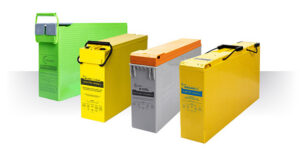
For UPS cabinets, standby systems and critical backup where accessible installation, replacement and maintenance matter.

Reliable sealed lead acid performance for UPS, communications, automation and standby applications.

High-quality AGM battery performance for UPS, communications and automation applications.

Dependable AGM batteries for service teams across standby and backup power applications.

For established UPS replacement programs, standby systems and critical backup environments.

For testing UPS batteries, standby banks and critical battery systems during maintenance inspections.
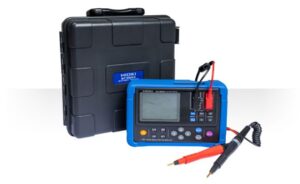
Test UPS and critical battery systems without disconnecting batteries from service.

Reliable charging across standby, UPS and industrial backup applications.
Match the products to the job
Battery replacement programs
Dependable products for scheduled replacement, maintenance contracts and urgent callouts.
Testing & maintenance
Check battery health during planned maintenance without unnecessary disruption.
Critical backup protection
Protect infrastructure from interruptions, blackouts and unstable supply.
Built around uptime and the realities of recurring maintenance
Built around uptime
UPS batteries sit behind critical infrastructure. Product selection considers runtime, replacement cycle, load profile, site access and the cost of failure.
Practical for recurring maintenance
Replacement is not a one-off purchase. Valen supports battery options, testers and components that fit repeat maintenance workflows.
Support across critical sectors
UPS requirements across data centres, healthcare, banking, government, commercial, industrial and communications infrastructure.
Components that keep work moving
From front terminal batteries and monoblocs to testers, chargers and UPS systems, the core products to keep backup ready.
Servicing Clients Australia and New Zealand Wide
Valen Power partners with industry leaders across diverse sectors providing innovative energy storage solutions and unparalleled support to meet their unique needs.


Valen Resource Centre
The most comprehensive library of information about industrial batteries and energy storage anywhere.