Home / Industrial Battery Testers / Battery Load Testers
Battery Load Testers
Valen’s full range of battery testers ensures there is a way of finding out just how reliable your battery system is!
Battery Capacity Testing with Controlled Loads
Valen Battery Load Testers provide controlled battery discharge testing for assessing capacity and performance across industrial and critical power applications.
Unlike indicative testing, which provides a rapid assessment using short pulse loads, load testing applies a controlled electrical load to evaluate how a battery performs during discharge.
This makes battery load testing useful where a more comprehensive assessment of battery capacity is required.
Battery Load Tester Range
Choose battery load testing equipment according to the battery voltage, capacity, discharge requirements and testing application.
Battery Load Testers Range

Volt: 12 V
Cap: 25 Ah
In Stock
Specifications
| Voltage | 12 V |
|---|---|
| SKU | BT10001 |
| Length | 200 mm |
| Width | 140 mm |
| Height | 190 mm |
| Capacity | 25 |

Volt: 12 V
Cap: 25 Ah
Low Stock
Specifications
| Voltage | 12 V |
|---|---|
| SKU | BT10011 |
| Length | 200 mm |
| Width | 140 mm |
| Height | 190 mm |
| Capacity | 25 |

Volt: 12 V
Cap: 25 Ah
Low Stock
Specifications
| Voltage | 12 V |
|---|---|
| SKU | BT10009 |
| Length | 200 mm |
| Width | 140 mm |
| Height | 190 mm |
| Capacity | 25 |

Volt: 24 V
Cap: 25 Ah
In Stock
Specifications
| Voltage | 24 V |
|---|---|
| SKU | BT10002 |
| Length | 200 mm |
| Width | 140 mm |
| Height | 190 mm |
| Capacity | 25 |
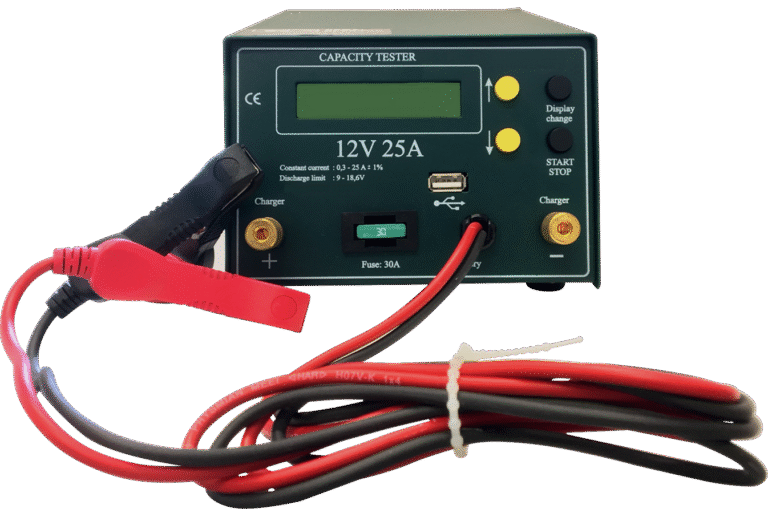
Volt: 12/24 V
Low Stock
Specifications
| Voltage | 12/24 V |
|---|---|
| SKU | BT10003 |
| Length | 200 mm |
| Width | 140 mm |
| Height | 190 mm |
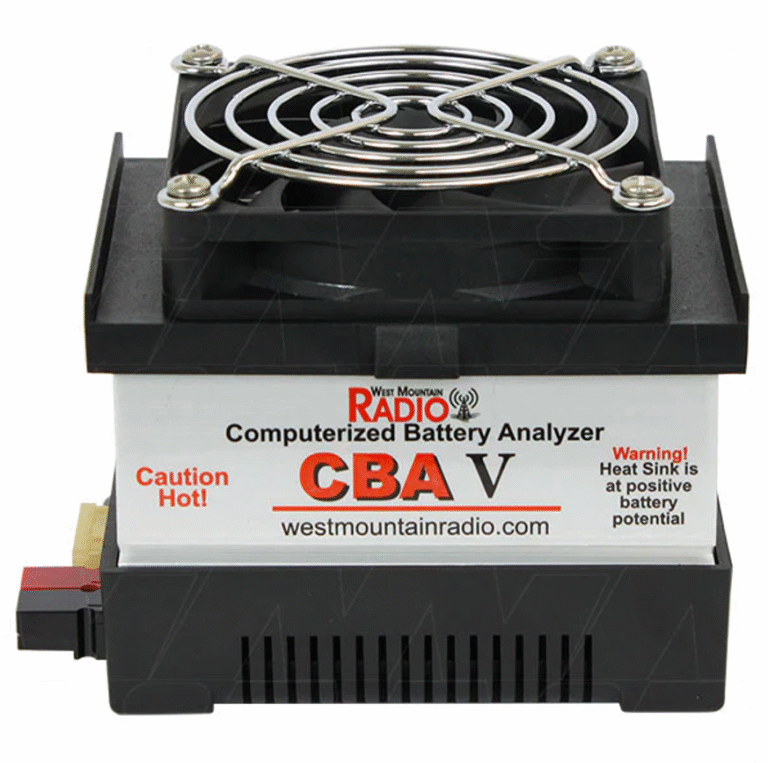
Low Stock
Specifications
| SKU | BT10016 |
|---|---|
| Length | 92 mm |
| Width | 72 mm |
| Height | 89 mm |
| Box Quantity | 1 |
Download Specification Sheet
Download Information Sheet

In Stock
Specifications
| SKU | BT10004 |
|---|---|
| Length | 260 mm |
| Width | 220 mm |
| Height | 270 mm |

Low Stock
Specifications
| SKU | BT10005 |
|---|---|
| Length | 260 mm |
| Width | 220 mm |
| Height | 270 mm |

Volt: 48 V
Cap: 100 Ah
In Stock
Specifications
| Voltage | 48 V |
|---|---|
| SKU | BT10006 |
| Length | 260 mm |
| Width | 220 mm |
| Height | 270 mm |
| Capacity | 100 |
| Box Quantity | 1 |
| NATO Stock Number (NSN) | Constant Current Load Tester (CCOLT) 48V 100A |
Ideal applications include


What Is a Battery Load Tester?
A battery load tester applies a controlled electrical load to a battery while its performance is monitored.
By measuring battery behaviour during discharge, technicians can assess whether the battery delivers the required performance under defined test conditions.
The appropriate test procedure depends on the battery technology, capacity, manufacturer’s specifications and purpose of the test.
Constant Current Battery Load Testing
Constant current load testing maintains a defined discharge current while the battery is tested.
This provides a controlled method of assessing battery performance and can be used to evaluate available capacity against specified test conditions.
The required discharge current, test duration and end voltage should be determined according to the battery specifications and applicable test procedure.
Battery Capacity Testing
Battery capacity is commonly expressed in Ampere-hours (Ah) at specified discharge conditions.
A controlled discharge test can provide valuable information about the battery’s ability to deliver energy over the required period.
Battery capacity testing can be useful for:
- Commissioning
- Preventative maintenance
- Performance verification
- Battery condition assessment
- Quality assurance
- Troubleshooting
- Replacement planning
Test results should be interpreted according to the battery manufacturer’s specifications and the conditions under which the test was performed.
Battery Load Testing for Preventative Maintenance
Industrial batteries may spend long periods in standby service before being required to support a critical load.
A structured battery testing program can help maintenance teams assess battery performance and identify deterioration before the battery is required during an outage or other critical event.
Load testing can form part of this maintenance strategy where a controlled capacity assessment is required.
Load Testing vs Indicative Battery Testing
Battery load testing and indicative testing serve different maintenance requirements.
Load Battery Testing
Load testing applies a controlled discharge to assess battery performance over defined test conditions.
It is appropriate where a more comprehensive capacity assessment is required.
Indicative Battery Testing
Indicative testing uses short pulse loads to provide a rapid assessment of battery condition or capacity.
It is particularly useful for routine field inspections where technicians require quick results and a full discharge test would be impractical.
The appropriate method should be selected according to the battery system and maintenance objective.
Load Testing vs Impedance Testing
Impedance testing provides another approach to battery condition assessment.
Rather than performing a full controlled discharge, impedance testing measures electrical characteristics that can be monitored over time to identify changes in battery condition.
This can be useful for critical installations where taking batteries out of service for extended capacity testing is difficult.
Load testing remains relevant where actual discharge performance or capacity needs to be evaluated under controlled conditions.
Choosing a Battery Load Tester
Consider the following when selecting battery load testing equipment:
- Battery technology
- Nominal voltage
- Battery capacity
- Required discharge current
- Required test duration
- End voltage
- Tester load capacity
- Testing method
- Data recording requirements
- Portability
- Field or workshop use
- Battery system configuration
The tester must be appropriately specified for the battery and intended test conditions.