Most critical infrastructure projects don’t arrive fully formed. A telemetry network densifies site by site. A rail corridor extends in stages. A mine expands its footprint as new areas open up. A distribution network adds remote assets as demand grows. Almost every project a project manager or asset manager runs today is really a series of projects, rolled out over months or years — which is exactly the problem modular solar energy storage is designed to solve.
Power is usually the exception. Too often, the energy system for stage one is sized, engineered, and installed as if it were the whole story — and when stage two arrives, the options are a full redesign, an expensive retrofit, or a second, mismatched system bolted on beside the first. None of those are good outcomes for a budget, a schedule, or an asset register.
Modular solar energy storage exists to remove that trade-off. Instead of a fixed, one-off system, you deploy a platform designed to be added to — so each new phase extends what’s already there instead of replacing it.
What Modular Solar Energy Storage Looks Like in Practice
It’s worth being specific about what this means, because the value is in the engineering detail, not the marketing term.
Vantara is built around this principle directly. Its solar array expands in 12.9 kWp increments, and inverter capacity scales from 30 kVA up to 90 kVA as load grows. The racking is designed to accept future additions — including loads like EV charging — without reworking the original installation. Adding capacity later means adding to the system, not re-engineering it.
Vantara Rapid takes the same modular logic and optimises it for distributed rollouts across many remote sites. Its standardised units remove bespoke engineering at each location, and individual systems can be paralleled for extra capacity or redundancy as a network of remote assets grows — useful when a project’s “phase two” is really twenty more sites rather than one bigger one.
V-Trail is modular in two directions at once: its battery bank is built from 4.8 kWh modules that can be adjusted for capacity, and its 35 kW MPPT charge capacity leaves headroom for future PV expansion via an additional solar mat or skid as load increases. Because it’s towable, it can also be redeployed between sites as a project’s priorities shift.
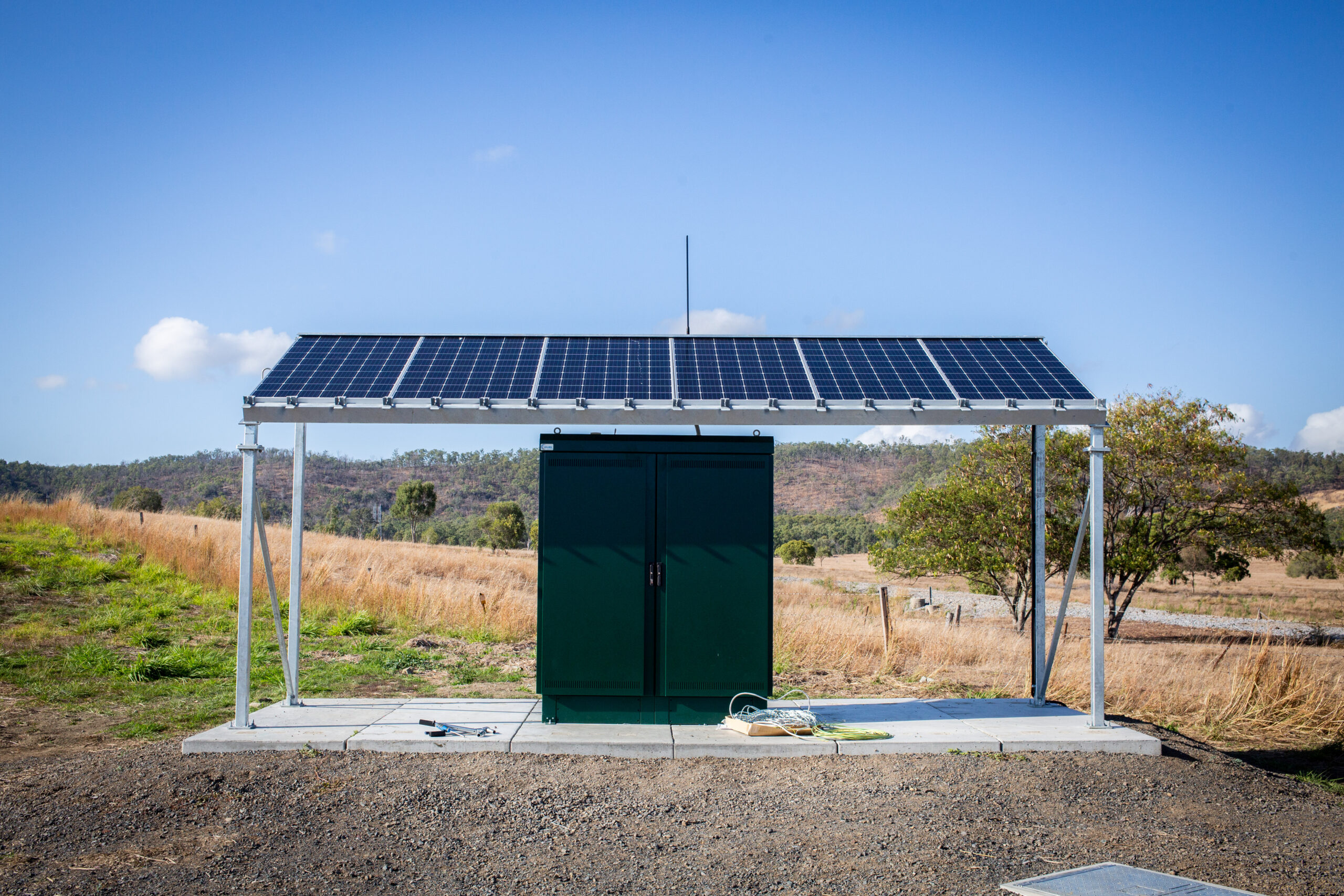
ModX1 and ModX2 bring the same thinking to smaller, single-site deployments. Both arrive pre-wired and pre-tested from the factory, so on-site work is installation, not integration. ModX2’s enclosed, turnkey design also means units can be redeployed to a future site once a project phase is complete — capacity that follows the project rather than sitting idle.
Where this matters across your network
For communications and telemetry operators extending LoRaWAN, SCADA, or wireless coverage, ModX1 and ModX2 let you standardise a power package and roll it out site by site without re-specifying the system each time.
For rail signalling and DNSP assets extending along a corridor or feeder, Vantara and V-Trail scale in place as more equipment or higher-availability requirements come online — and Vantara’s built-in redundancy and fault tolerance keep critical loads running through that growth, without a redesign at every stage.
For mining operations opening new pits or moving infrastructure as a site develops, V-Trail’s towability and Vantara Rapid’s paralleled, standardised units mean power can follow the operation rather than anchoring it.
For ITS networks adding roadside cabinets, signals, or monitoring points, the same pre-engineered ModX platform keeps every new site consistent with the last — simpler for procurement, installation crews, and long-term maintenance alike.
The part that actually makes it low-risk: process
Modular hardware only pays off if the system was specified with future phases in mind from the start — which is where Valen’s process matters as much as the equipment.
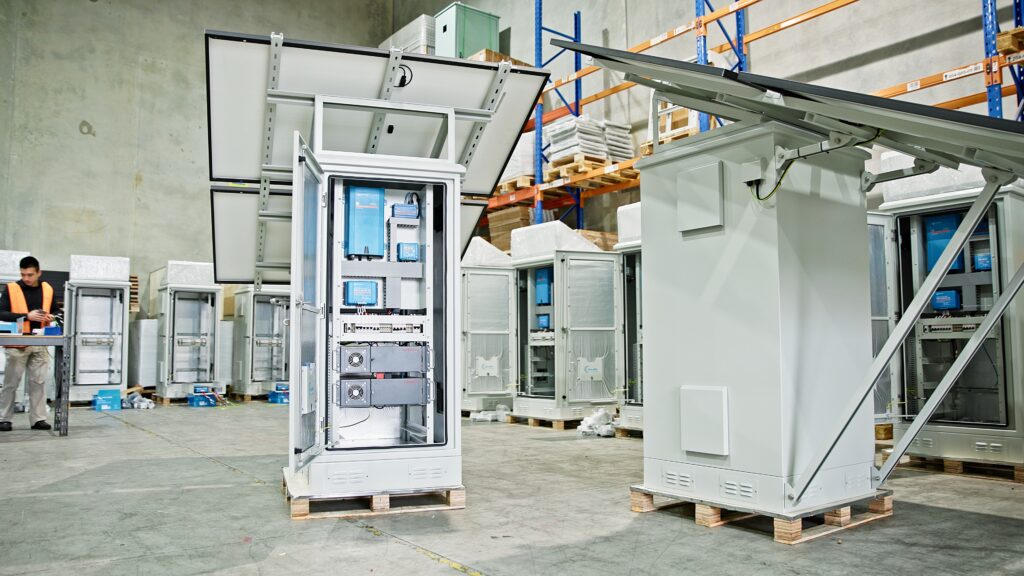
Discovery is where we capture not just today’s load, but where the project is headed: how many more sites, how much more capacity, over what timeframe. Design builds that into the system architecture from day one — the right increments, the right headroom, the right battery and inverter sizing — so expansion is a planned step, not a surprise. Delivery brings factory pre-integration and standardised, repeatable installation, so rollout stays consistent whether it’s the first site or the fiftieth. And Support continues after handover, with remote monitoring through the Vonnect EMS giving you the visibility to plan the next phase on real performance data rather than guesswork.
That combination — modular solar energy storage, backed by a process that plans for growth rather than reacting to it — is what lets a phased infrastructure project stay on one power platform from start to finish.
Start where you are
You don’t need to have every future phase mapped out to start this conversation. That’s what Discovery is for. If you’re planning an expansion — or want a power platform that won’t need replacing when you do — get in touch with Valen Power at https://valen.com.au/contact-us/


